Nectin-4 identified as rubella virus entry receptor in airway and placental cell models
Authors report nectin-4 lets rubella virus enter cells in airway and placental models, giving a molecular mechanism for respiratory transmission.
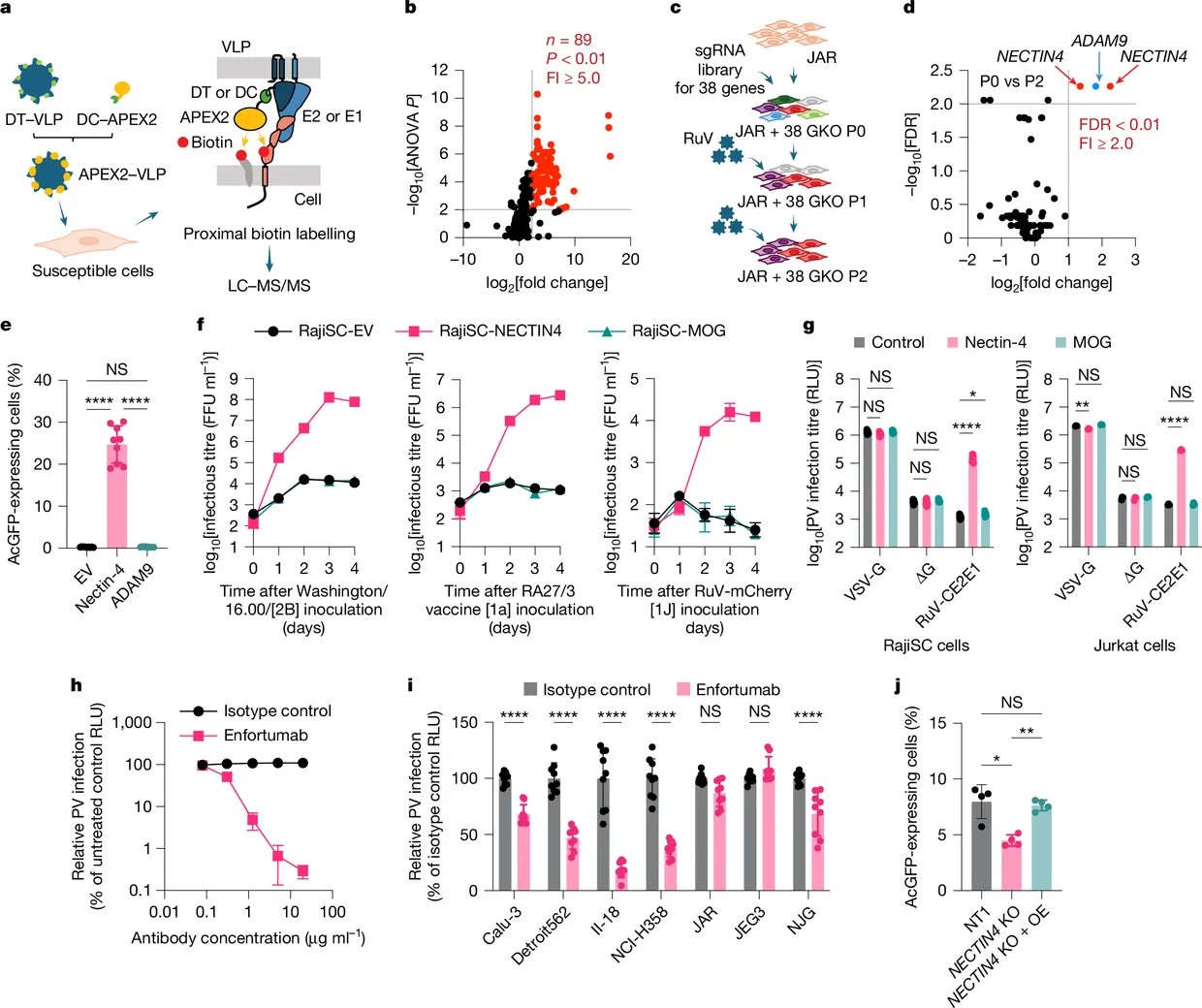
A study in Nature reports that nectin-4 is a functional entry receptor for rubella virus (RuV). The virus causes rubella and, when acquired during pregnancy, congenital rubella syndrome. The authors combined proximity biotin labelling-based proteomics with CRISPR–Cas9 validation, and tested the receptor in cell cultures, polarized airway epithelial models and placental models nature.com
Naturenature.comOpen source ↗.
Until now the cellular entry mechanism of RuV has been poorly characterized, because few host receptors had been identified. According to the authors, this limited research on pathogenesis and the development of therapies.
How the virus enters cells
Ectopic expression of nectin-4 made non-permissive cells susceptible to RuV. Blocking or genetic ablation of nectin-4 reduced infection. From these results the authors conclude that nectin-4 is a major entry factor.
Nectin-4 interacts directly with the RuV envelope glycoprotein heterodimer. It facilitates receptor-mediated endocytosis after the virus first attaches to cellular lipids in a calcium-dependent manner nature.com
Naturenature.comOpen source ↗.
Airway and placental models
In polarized airway epithelial models, nectin-4 mediated basolateral entry of RuV and supported release of progeny virus from the apical side. The authors state that this provides a molecular mechanism for respiratory transmission.
In placental models, nectin-4 was highly expressed on syncytiotrophoblasts and facilitated infection at the maternal–fetal interface. Additional nectin-4-independent pathways contribute to infection of other trophoblast populations.
The authors describe nectin-4 as a key factor for respiratory transmission and early placental infection by RuV. They also call it a promising therapeutic target for preventing rubella and related diseases. The results come from cell and tissue models; the report does not describe tests of any treatment nature.com
Naturenature.comOpen source ↗.