Sydney team maps deuterium in solid solution in FCC alloys with cryogenic atom probe tomography
University of Sydney researchers used deuterium in FCC alloys and found it concentrates in hydrogen-affinitive phases, separating dissolved hydrogen from defect-trapped hydrogen.
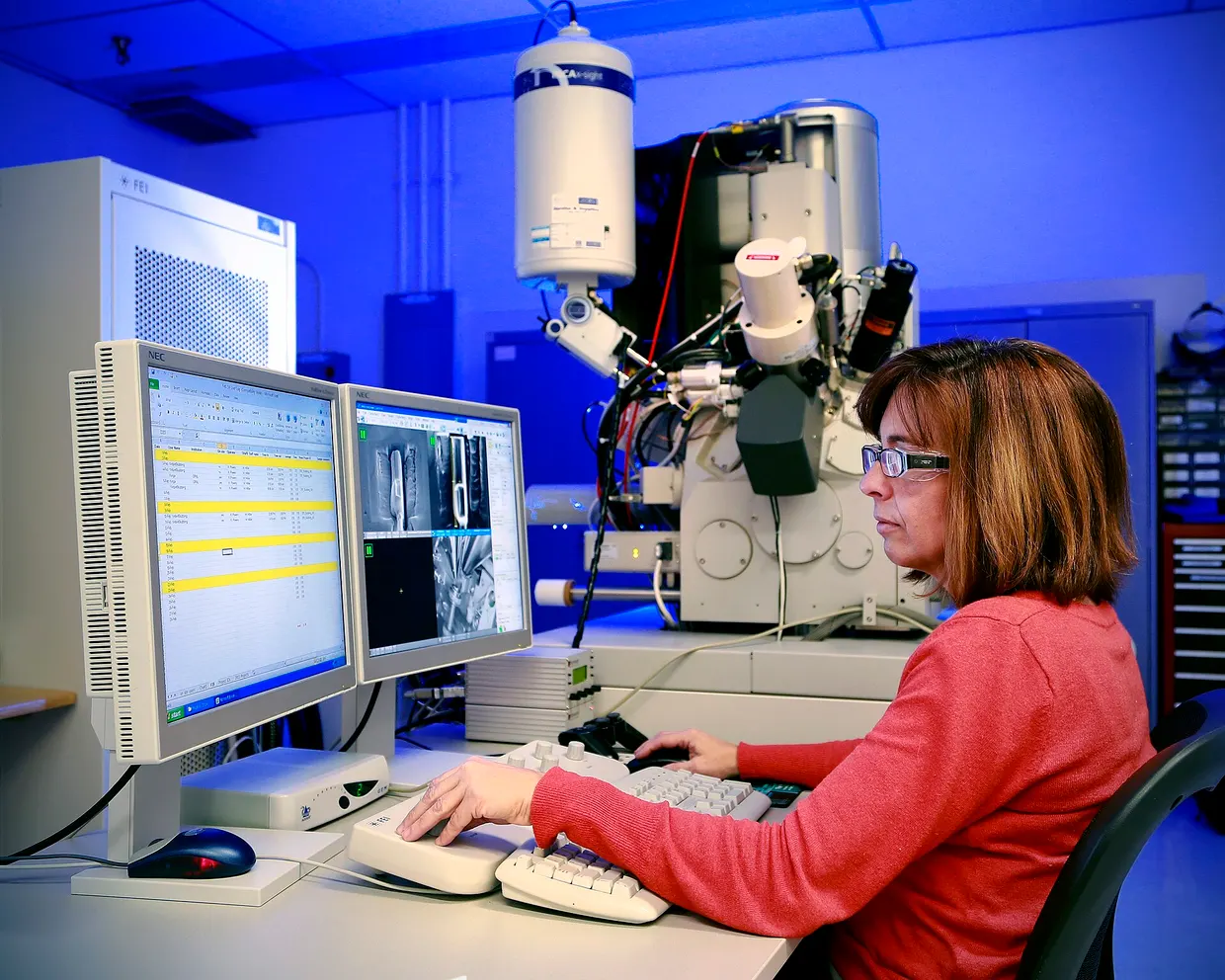
Researchers at the University of Sydney, led by Professor Julie Cairney, report observing hydrogen dissolved between metal atoms in alloys. The paper was published in Nature on 4 November 2026 and is available via dx.doi.org nature.com
dx.doi.orgnature.comOpen source ↗. The team used cryogenic atom probe tomography (cryo-APT) and replaced hydrogen with deuterium. The samples were face-centred cubic (FCC) multi-principal-element alloys containing coherent FCC precipitates.
According to the authors, deuterium atoms reproducibly concentrate in hydrogen-affinitive phases, consistent with theoretical predictions. They also resolved differences in deuterium content between phases with distinct local chemistries and crystal structures. These differences are consistent with the calculated hydrogen solution energies of those phases.
Three states of hydrogen in metals
Hydrogen in crystalline materials exists in three main states: dissolved as an interstitial solute, bonded in hydrides, or trapped at defects such as vacancies, dislocations and grain boundaries. APT had studied hydrides and defect-trapped hydrogen more extensively. Hydrogen in solid solution is harder to detect. Its solubility is low: body-centred cubic iron typically contains only a few tens of atomic ppm. It is also highly mobile and can diffuse to the surface and desorb before analysis. Cryogenic sample transfer mitigates this loss but does not eliminate it.
Charging methods add further ambiguity. Electrochemical charging can impose very high hydrogen fugacity and generate large numbers of vacancies. Electron-beam or ion-beam processing during specimen preparation can also create vacancies that trap hydrogen nature.com
dx.doi.orgnature.comOpen source ↗.
Method and model alloys
The authors chose FCC alloys because FCC lattices offer higher hydrogen solubility and lower diffusivity than BCC lattices. APT tip specimens were charged electrolytically with deuterium. Voltage pulsing rather than laser pulsing was used to reduce ambiguity against background hydrogen in the instrument.
The first system was the equiatomic CoCrNiFeMn alloy first developed by Cantor et al. Its locally distorted lattice is known to hinder hydrogen diffusion. After charging, about 3 s were spent removing the electrolyte, and the tips were then quenched in liquid nitrogen.
The authors conclude that APT can go beyond identifying hydrides and solute-decorated defects to examine hydrogen in solid solution nature.com
dx.doi.orgnature.comOpen source ↗. The university states that the results may help explain how hydrogen moves through metals and contributes to embrittlement. This is a laboratory study on model alloys.