South China University of Technology: Cu/eNMR reactor removes 90.5% of nitrate from deionized water
In tests with 50 mg/L NO3−-N, the copper-modified nickel membrane reactor reached 90.5% removal in 3 h at 5 mA/cm2; a conventional reactor with the same cathode removed 12.8%.
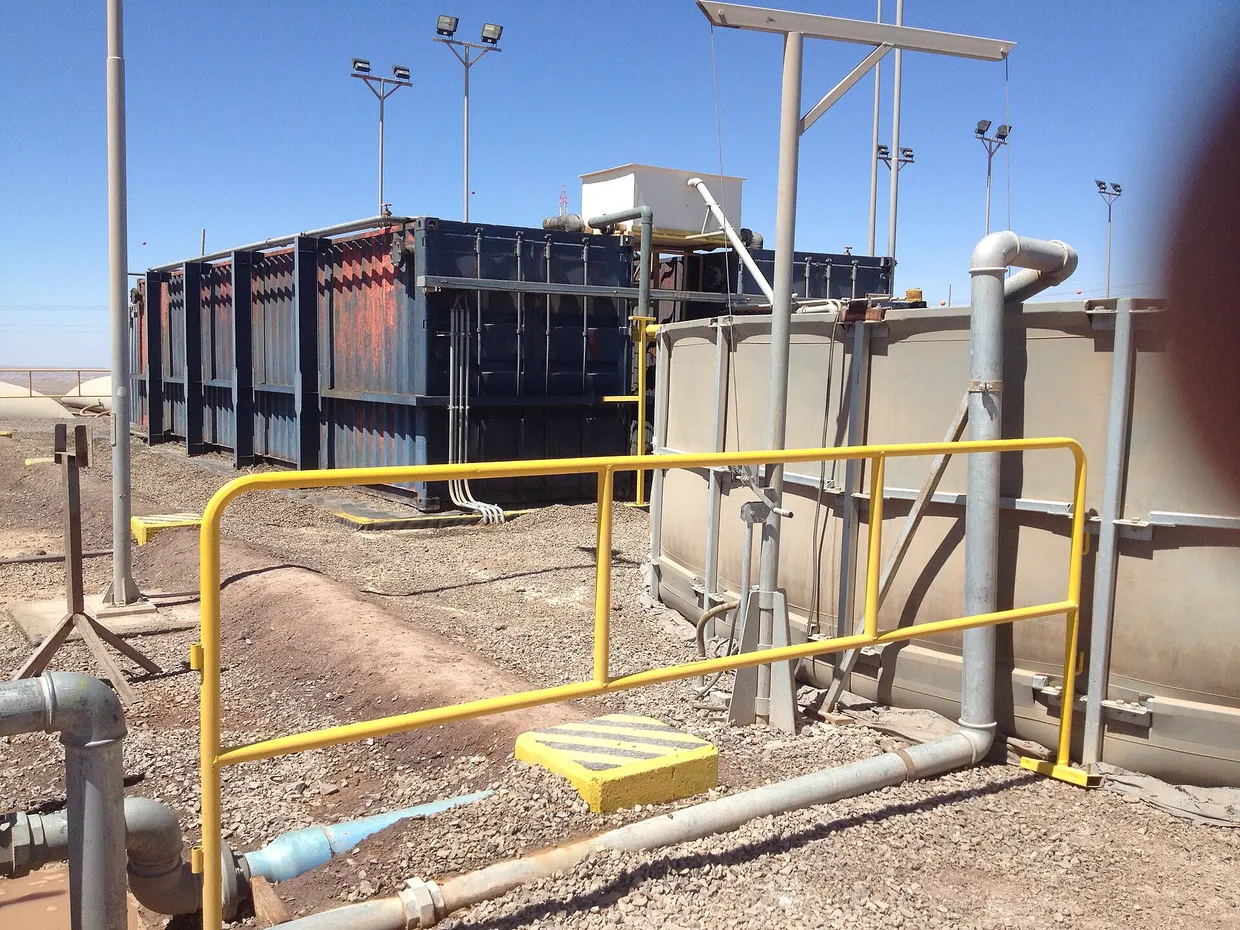
A team from South China University of Technology, the University of Hong Kong, the National University of Singapore and Qingdao University of Technology has described a copper-modified electrochemical nickel membrane reactor (Cu/eNMR) that removes nitrate from deionized water. The work was published in Nature Communications on 3 November 2026. nature.com
Nature Communicationsnature.comOpen source ↗ The first authors, Weijian Duan, Zhiwei Feng and Jianan Gao, contributed equally.
Electrochemical hydrogenation (ECH) for wastewater treatment is often limited by its reliance on high-conductivity media. This restricts applications such as remediation of nitrate-contaminated groundwater.
For water containing 50 mg/L NO3−-N, Cu/eNMR achieved 90.5% nitrate removal at 5 mA/cm2 within 3 h, with an energy consumption of 0.139 kWh/g-N. A conventional reactor using the same cathode gave 12.8% removal and 8.6 kWh/g-N.
Mechanism of nitrate hydrogenation
According to the authors, nitrate hydrogenation is enabled by direct electron transfer to the reaction chamber, coupled with directional K+ migration that maintains charge neutrality. nature.com
Nature Communicationsnature.comOpen source ↗ The mechanistic analysis shows that interfacial charge-transfer resistance governs the direction of electron flow.
The membrane configuration also suppresses anodic side reactions. The authors list active chlorine formation, chlorinated by-products, organic polymerization and metal-induced anode deactivation among them.
Groundwater test and emissions
The team also carried out solar-powered treatment of real groundwater, which, according to the authors, demonstrates practical applicability. A life-cycle analysis indicates reduced greenhouse-gas emissions compared with conventional electrochemical and biological treatments.
The authors conclude that this architecture broadens the feasible application of ECH to low-conductivity water treatment. nature.com
Nature Communicationsnature.comOpen source ↗ The corresponding authors are Chunhua Feng and Chuyang Y. Tang.