Kilimanjaro air temperature 2004–2024: daytime warming near summit, cooling at 3000–3500 m
University of Portsmouth researchers combined station records with MODIS data on Kilimanjaro. Under clear skies, the summit warmed by day while 3000–3500 m cooled.
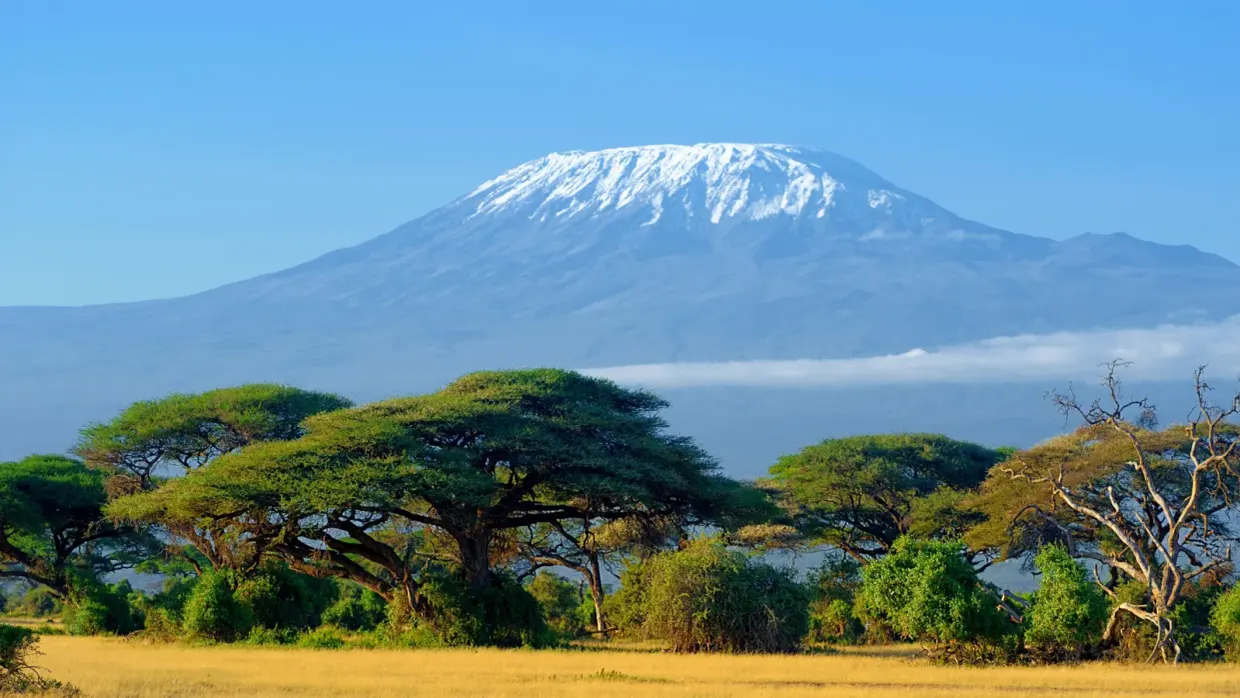
Researchers from the University of Portsmouth and the Nanjing University of Information Science and Technology report elevation-dependent warming on Mount Kilimanjaro under clear-sky conditions. The study, led by Yaping Mo with Nick Pepin, Harold Lovell and Yongming Xu, was published on nature.com in October 2026 in npj Climate and Atmospheric Science nature.com
nature.comnature.comOpen source ↗. The authors combined a long-term in situ air temperature transect with Moderate Resolution Imaging Spectroradiometer (MODIS) land-surface temperature, surface and topographic datasets. They then mapped clear-sky air temperature at four MODIS overpasses at 1 km resolution for 2004–2024.
Temperature trends along elevation gradients remain poorly understood in the tropics, because long-term high-elevation air temperature observations are sparse. Satellites measure land-surface temperature rather than air temperature, which is why the authors paired them with ground records.
Model accuracy and diurnal contrasts
The statistical models showed strong predictive performance. RMSE was 1.76 °C for the daytime model and 1.36 °C for the nighttime model, and R2 was 0.94 and 0.95 respectively. The modelled air temperature differs markedly between day and night.
Daytime air temperature shows strong spatial variability, affected by radiation and surface properties. Nighttime air temperature varies more gradually with elevation nature.com
nature.comnature.comOpen source ↗.
Trends by elevation
Trend analysis for 2004–2019 identified elevation-dependent warming under clear-sky conditions. Daytime trends become positive near the summit, at +0.05 to +0.10 °C/decade. The strongest cooling occurs at 3000–3500 m, at −0.13 to −0.14 °C/decade, coinciding with vegetation and land-cover change.
At night, weak warming dominates most elevations, at +0.04 to +0.15 °C/decade, while the summit remains near-neutral.
The authors conclude that the pattern on Kilimanjaro is shaped not only by elevation-dependent climate responses, but also by vegetation and land-cover changes that modify local surface-atmosphere coupling nature.com
nature.comnature.comOpen source ↗. Coincidence in time does not by itself show that vegetation caused the trends, and other influences on local temperature remain possible. The maps describe clear-sky conditions at fixed satellite overpass times and a single tropical mountain, so they do not extend directly to all weather conditions or to other mountain ranges.