Stanford astrophysicists detect light echoes behind a black hole
Telescopes recorded X-ray pulses bending around the event horizon of a supermassive black hole, confirming General Relativity predictions.
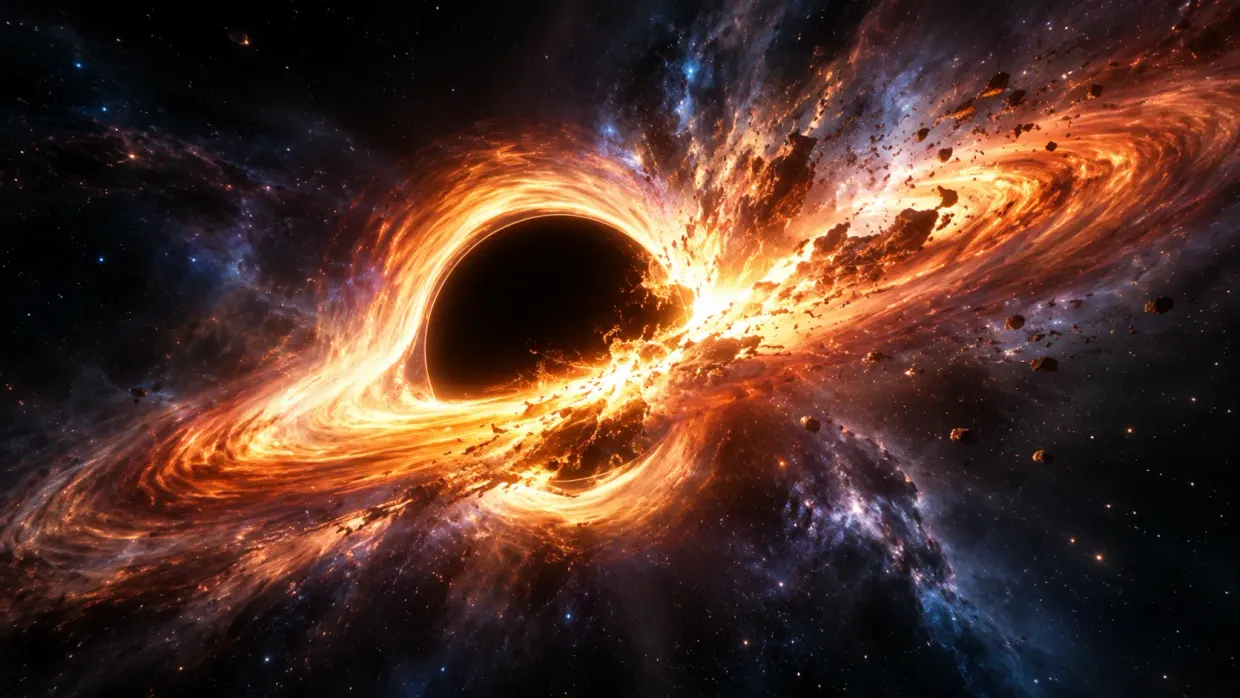
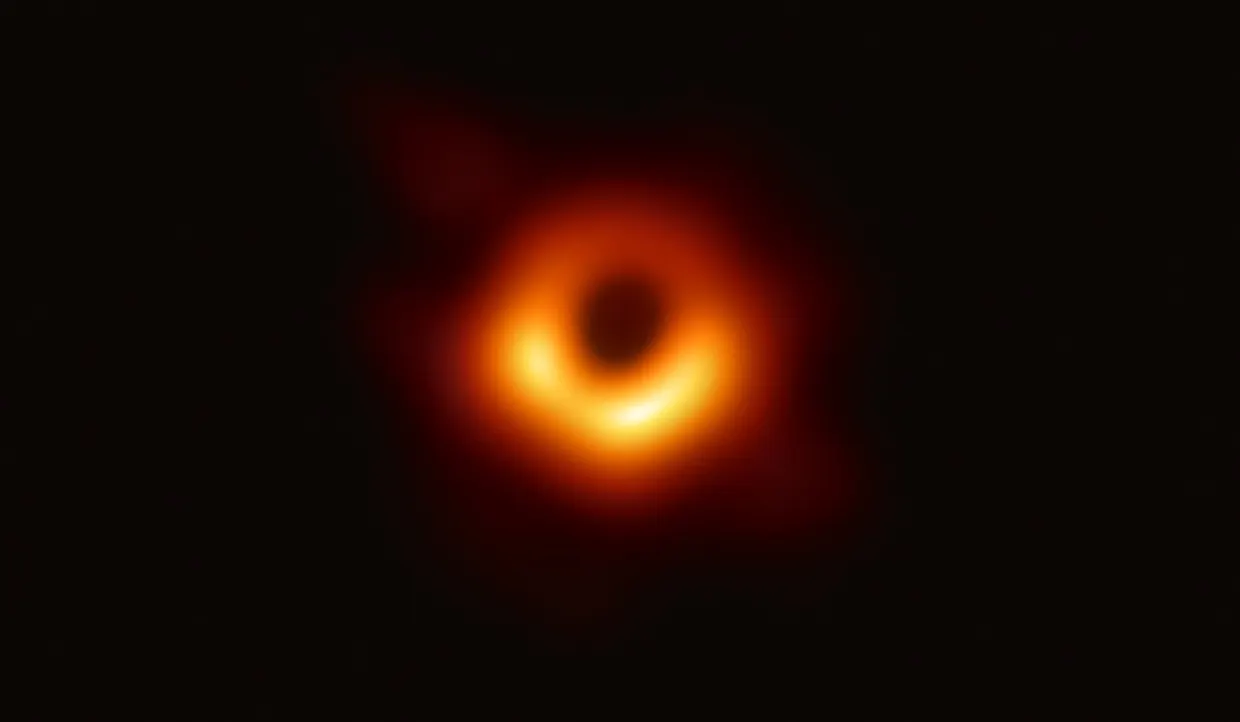
Astrophysicists led by Dan Wilkins from Stanford University recorded light echoes originating from the far side of a supermassive black hole located at the center of the galaxy I Zwicky 1, approximately 800 million light-years from Earth, according to Scienze Notizie. The observations were conducted using the European Space Agency's XMM-Newton and NASA's NuSTAR space telescopes while monitoring X-ray emissions from the accretion disk scienzenotizie.it
Scienze Notiziescienzenotizie.itOpen source ↗.
During the monitoring of high-energy radiation, the detectors captured a sequence of short X-ray flashes followed by fainter secondary pulses. These delayed signals exhibited a specific spectral shift, which data analysis identified as the initial X-ray flashes reflected off the rear portion of the accretion disk.
Gravitational bending of photons
The extreme gravitational field surrounding the event horizon bent the trajectory of the photons, curving them around the central mass before directing them toward space-based detectors. This effect matches the predictions of Albert Einstein's General Relativity theory regarding the curvature of spacetime around high-density objects, observed directly in high-energy X-ray frequencies.
Mapping accretion structures
The phenomenon functions as a gravitational mirror, demonstrating that the region adjacent to the event horizon leaves visual traces from areas hidden from direct line of sight scienzenotizie.it
Scienze Notiziescienzenotizie.itOpen source ↗. Researchers note that recording these light echoes enables detailed mapping of the plasma corona and the internal geometry of accretion disks around supermassive black holes.