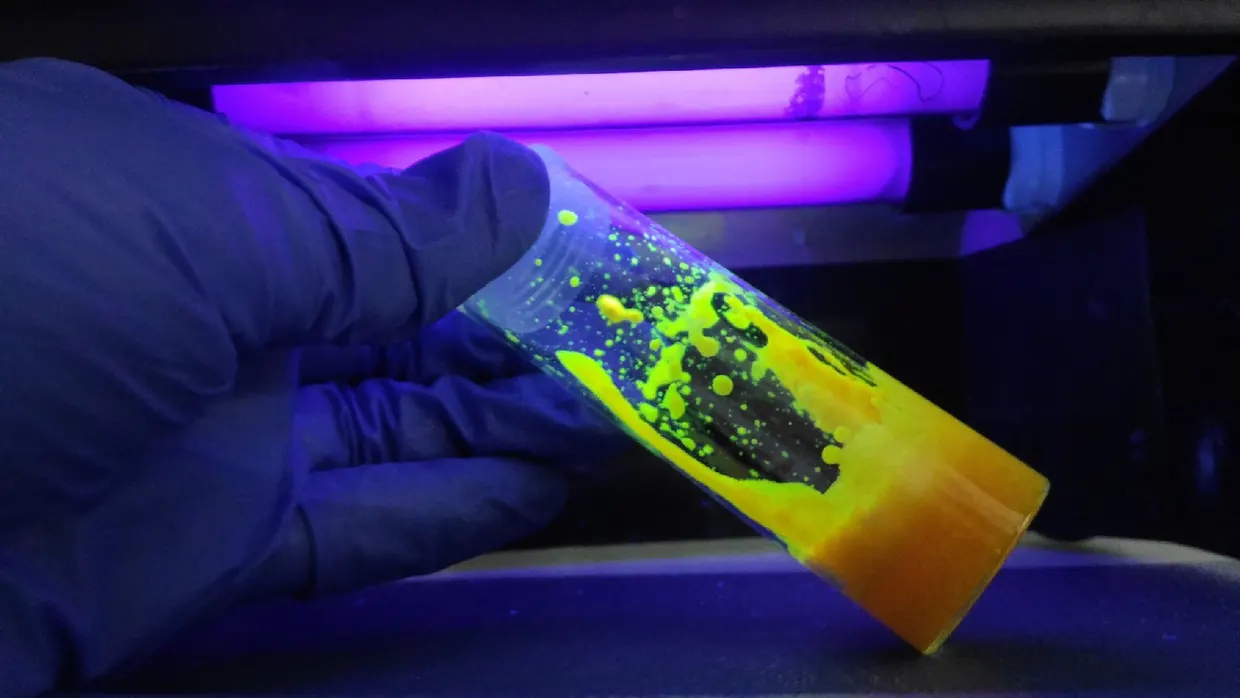
Leiden University develops superconducting detector capable of resolving individual photon numbers
Physicists built a prototype superconducting nanowire sensor that counts discrete photons to improve optical quantum computing.
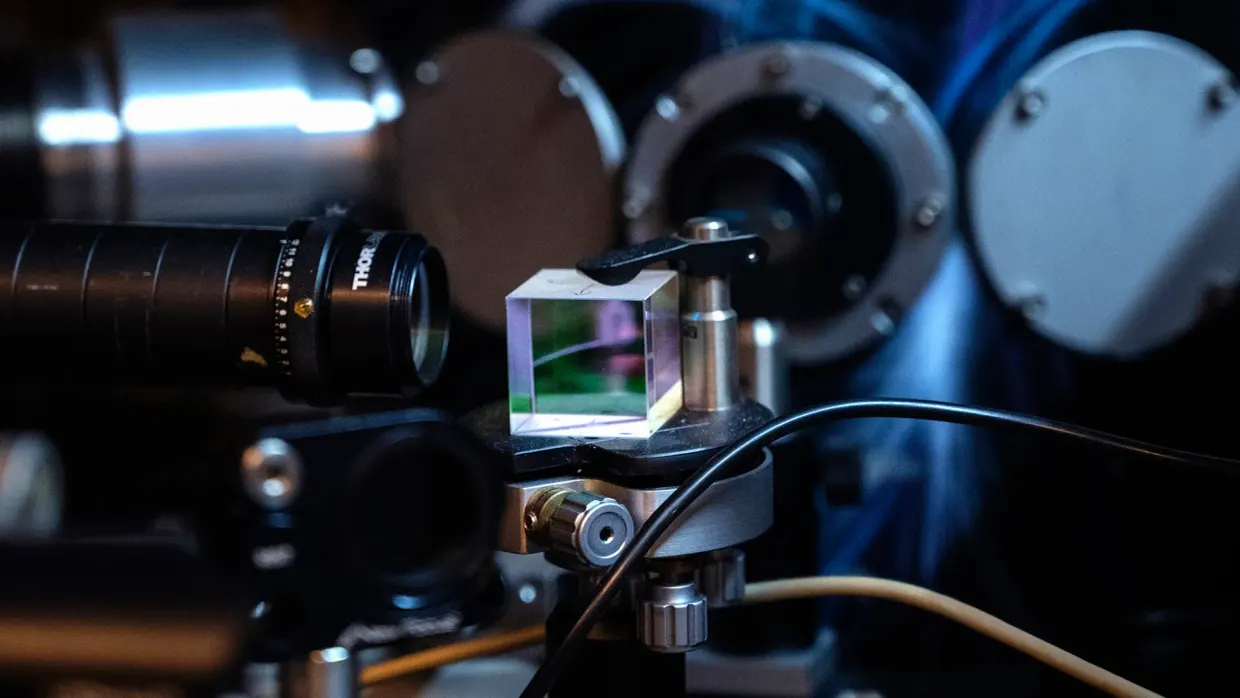
Physicist Erik Baalbergen at Leiden University developed a superconducting light detector prototype capable of distinguishing between one, two, and three or more individual photons, according to Interesting Engineering interestingengineering.com
Interesting Engineeringinterestingengineering.comOpen source ↗. The development took place as part of his doctoral research defended in the Netherlands alongside theoretical physicist Ilse Kuijf and master's student Lars Seldenthuis. The system aims to resolve a critical limitation in photonic data processing by recording not only the presence of light, but also the exact photon count arriving at the sensor surface.
Nanowire response and signal processing
The detection mechanism relies on superconducting nanowires operated at temperatures near absolute zero, where electrical resistance drops to zero. When an incoming photon strikes an ultrathin wire, it perturbs the superconducting state and produces a measurable electrical pulse. The research team modified the physical interface between the nanowire detector and its readout electronics, which reduced signal loss during transmission.
Rather than relying solely on the amplitude of the output pulse, the researchers analyzed the evolution of each signal over time. This temporal profile analysis allows the instrument to determine the precise quantity of incident particles while indicating the statistical certainty of each measurement without requiring additional complex electronics.
Integration with optical quantum hardware
While optical quantum computers execute most computational routines at room temperature using photons as qubits, their measurement stages still depend on cryogenic detectors interestingengineering.com
Interesting Engineeringinterestingengineering.comOpen source ↗. The ability to count single photons directly affects the fidelity of state measurements during computational tasks.
During the project, Baalbergen collaborated with Dutch hardware developer QuiX Quantum, which introduced a functional optical quantum computer prototype in 2026. According to the researchers, implementing time-resolved superconducting nanowire arrays will support higher calculation accuracy in commercial optical processors targeting chemical reaction modeling and material synthesis simulations.