Archaeologists discover ancient shipwreck cargo with clay packaging protecting ceramics
Divers documented structured stacks of plates preserved by clay damping layers along the outline of a degraded wooden cargo ship.
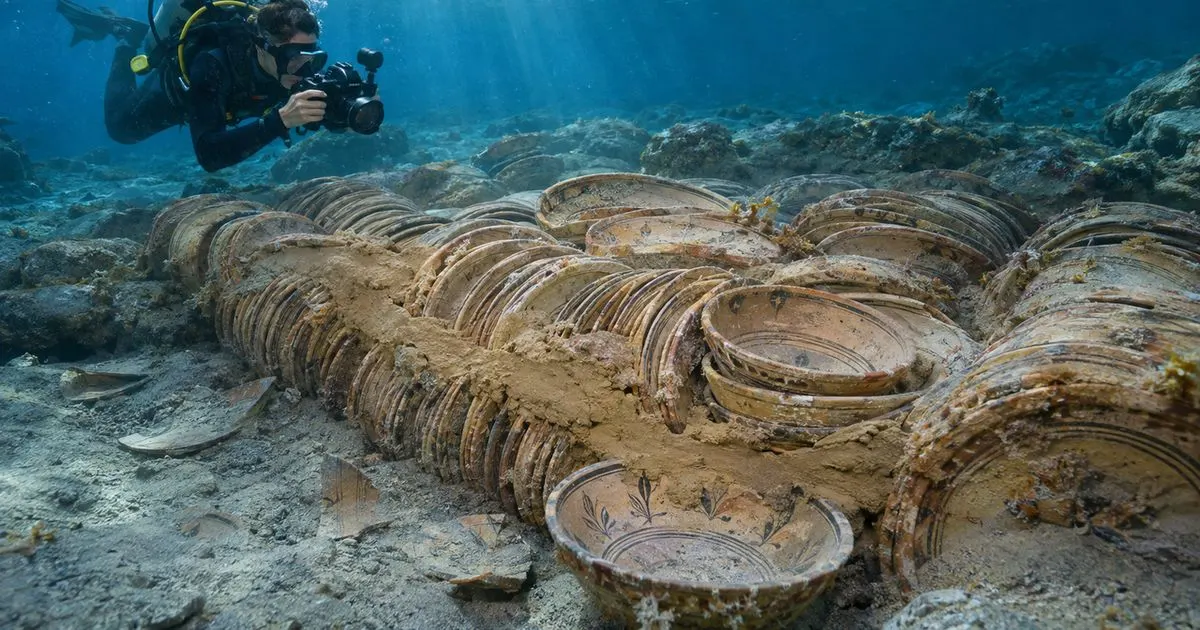
Archaeologists led by researcher Mara identified the remains of an ancient cargo ship carrying an organized commercial shipment of ceramic plates and bowls, according to catracalivre.com.br catracalivre.com.br
catracalivre.com.brcatracalivre.com.brOpen source ↗. The underwater survey revealed stacks of dishware following the outline of a largely deteriorated wooden hull on the seafloor near an infrequently visited coast. Controlled dives were conducted to map the site and photograph the arrangement before retrieving any objects, preserving the contextual layout of the cargo.
Protective clay packing
Initial visual inspections indicated that several bowls and plates remained largely intact despite prolonged exposure underwater. Between the stacked ceramics, researchers identified hardened blocks of clay located precisely where the plates and bowls made contact. The team formulated a working hypothesis that this clay served as cushioning material during maritime transport, possibly stabilized within small wooden crates that have since decayed. Laboratory analyses were initiated on a retrieved piece with adhered border material to differentiate intentional packing clay from ambient marine sedimentation.
Cargo distribution and origin analysis
Survival rates across the shipwreck varied based on load positioning, the dynamics of the sinking, and exposure to environmental concretions. The volume and varied forms of the dishware indicate a commercial shipment rather than crew mess gear. During post-recovery inspections, researchers documented identical maker marks on multiple plates, suggesting production in a common workshop. A coin recovered near the site provided an approximate temporal reference, though the origin, destination, and precise date of the ship remain under systematic catalog comparison.