Archaeologists Uncover Unique Early Iron Age Gold Bear Figurine in Almaty Mound
Excavations in Kazakhstan yielded an unprecedented zoomorphic headdress ornament alongside multiple burials, despite ancient looting.
Archaeologists excavating an Early Iron Age burial mound in Almaty, Kazakhstan, have uncovered human remains and an unprecedented gold figurine, according to a report by futurezone.de citing the Association of Museums of the City of Almaty futurezone.de
futurezone.defuturezone.deOpen source ↗. Although the site suffered extensive looting in antiquity that left a large crater, recent scientific fieldwork revealed preserved cultural layers and fragmented grave goods.
Human Remains in Looted Context
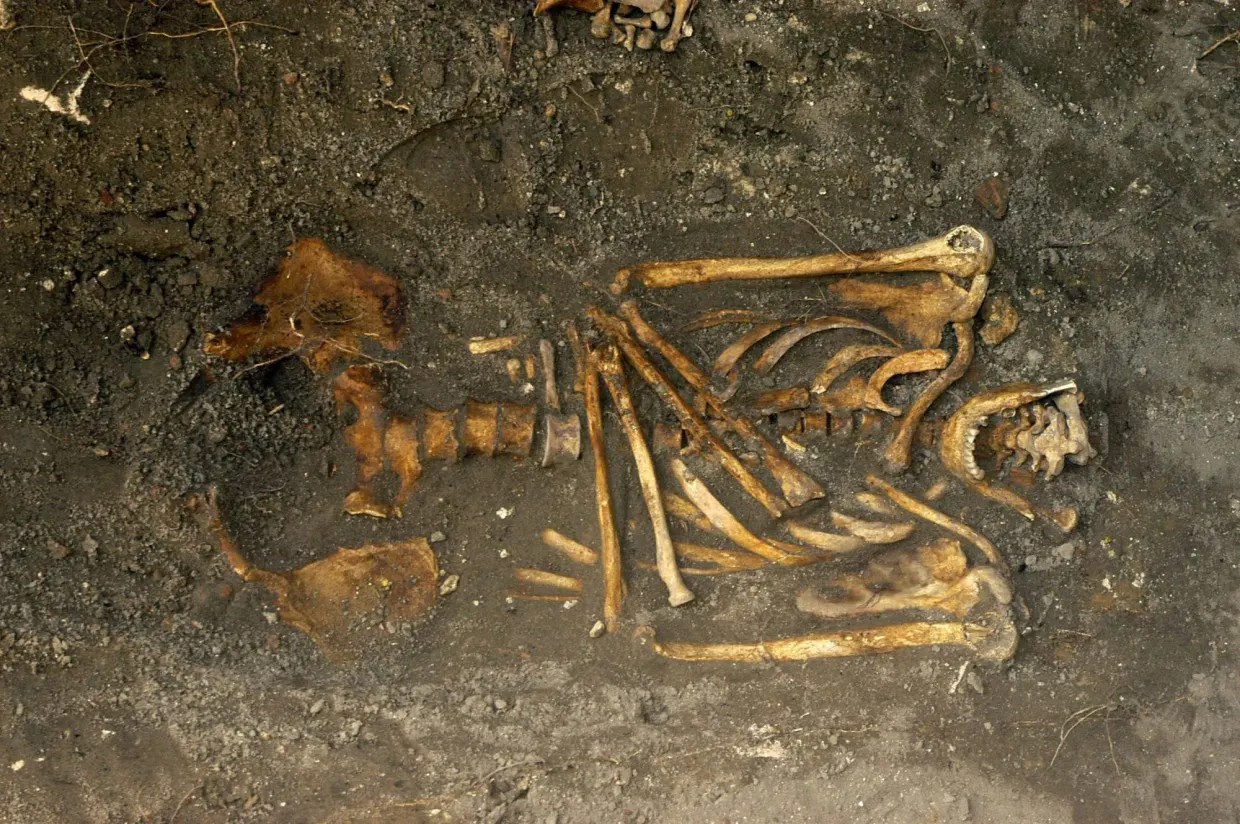
During the excavation, researchers documented a significant amount of osteological material scattered across the mound. Anthropological analysis indicates the burial complex likely contained the remains of four adults and three children. However, archaeologists stated that the exact total number of individuals interred at the site remains to be conclusively established due to past disturbances.
Zoomorphic Headwear Ornament
The central artifact recovered from the dispersed debris is a miniature gold figurine cast in the shape of a bear. Physical examination revealed dedicated attachment holes, indicating the object was sewn onto an ancient headdress as an ornamental element. While a leopard sculpture serving a similar functional role was discovered at the Kok-Kainar cemetery in Almaty in 2014, the bear motif represents an absolute anomaly for the regional archaeological record.
Lyazzat Sagyndykova, director of the Association of Museums of the City of Almaty, stated that sculptural representations of bears are unique within Kazakhstan's early nomadic assemblages futurezone.de
futurezone.defuturezone.deOpen source ↗. According to Sagyndykova, the artifact provides a critical typological link that helps trace trans-Eurasian cultural networks spanning from the Black Sea region to the Altai Mountains.