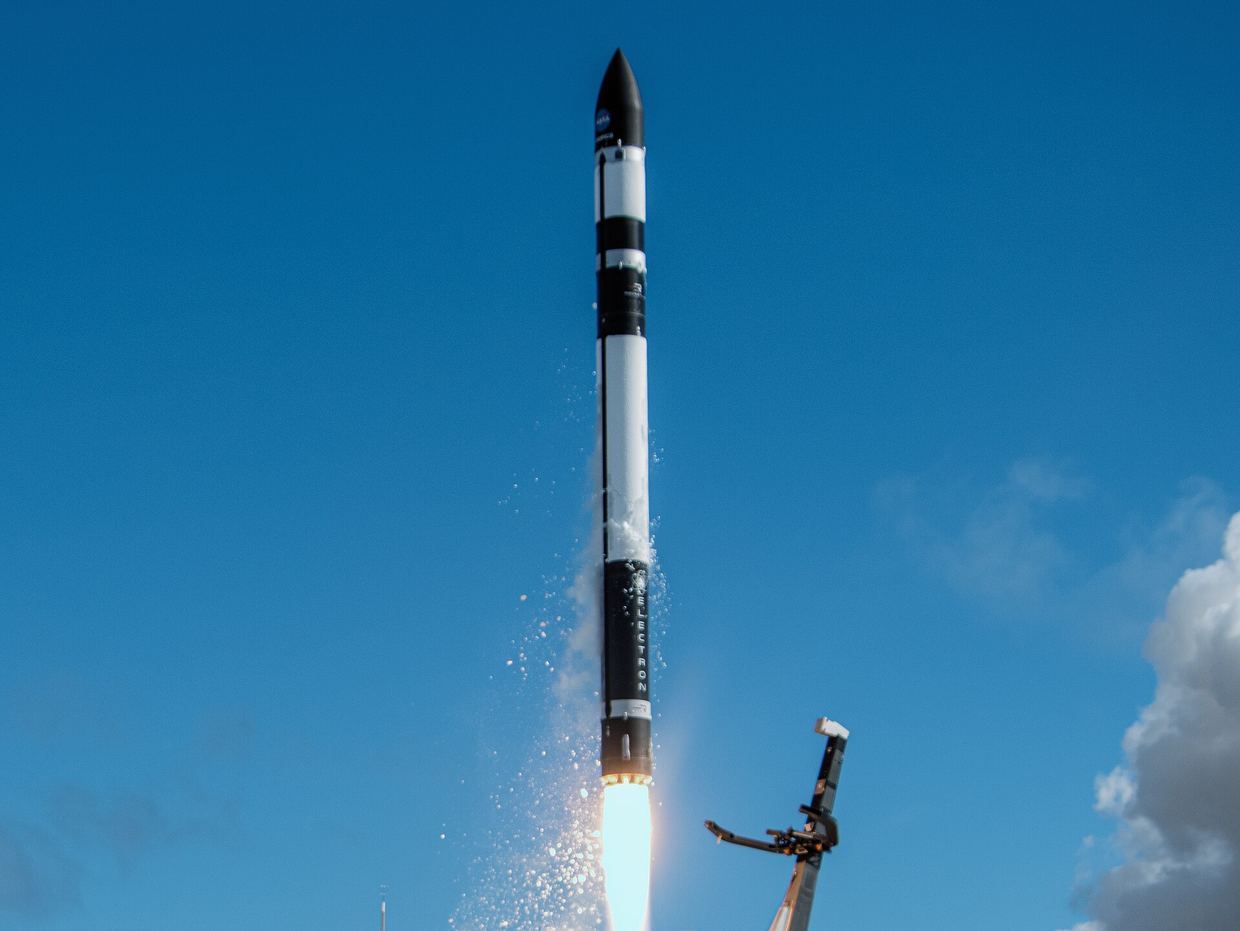
Rocket Lab flies 99th Electron, placing iQPS radar satellite in 575 km orbit
Electron deployed the WADATSUMI-II synthetic aperture radar satellite for Japan's iQPS, Rocket Lab's 20th mission of 2026.
Key points
- Electron launched its 99th mission on November 3 NZDT from Launch Complex 1.
- WADATSUMI-II (QPS-SAR-20) was deployed into a 575 km orbit.
- It was Rocket Lab's 20th launch of 2026 and tenth for iQPS.
- The iQPS antenna unfolds to 3.6 m in orbit.
Rocket Lab launched its 99th Electron rocket from Launch Complex 1 in New Zealand at 5:41 a.m. NZDT on November 3 (16:41 UTC on November 2), deploying the WADATSUMI-II synthetic aperture radar satellite, also known as QPS-SAR-20, for Japan's iQPS into a 575 km low Earth orbit rocketlabcorp.com
Rocket Lab news releaseinvestors.rocketlabcorp.comElectron launched its 99th mission on November 3 NZDT from Launch Complex 1; WADATSUMI-II (QPS-SAR-20) was deployed into a 575 km orbitOpen source ↗
i-qps.net
iQPS mission announcementi-qps.netThe iQPS antenna unfolds to 3.6 m in orbitOpen source ↗. The mission, named "The Sea God Surveys", was Rocket Lab's 20th launch of 2026 and its tenth consecutive success for iQPS
rocketlabcorp.com
Rocket Lab news releaseinvestors.rocketlabcorp.comElectron launched its 99th mission on November 3 NZDT from Launch Complex 1; WADATSUMI-II (QPS-SAR-20) was deployed into a 575 km orbitOpen source ↗.
WADATSUMI-II and the iQPS radar constellation
Synthetic aperture radar images the ground through cloud and at night, which makes it useful for monitoring floods, landslides, infrastructure and shipping. The orbit inclination was tailored to improve iQPS revisit rates over the Asia-Pacific region, according to Rocket Lab rocketlabcorp.com
Rocket Lab news releaseinvestors.rocketlabcorp.comElectron launched its 99th mission on November 3 NZDT from Launch Complex 1; WADATSUMI-II (QPS-SAR-20) was deployed into a 575 km orbitOpen source ↗. iQPS satellites carry a deployable antenna that unfolds from about 80 cm in launch configuration to 3.6 m in orbit
i-qps.net
iQPS mission announcementi-qps.netThe iQPS antenna unfolds to 3.6 m in orbitOpen source ↗. Rocket Lab confirmed spacecraft separation about 56 minutes after liftoff
space.com
Space.comspace.comOpen source ↗.
iQPS is building a constellation of three dozen radar satellites. Eight more dedicated Electron launches are booked to complete it by 2030, and the next one, "The Mountain God Rises" with QPS-SAR-19, is scheduled no earlier than November 10 rocketlabcorp.com
Rocket Lab news releaseinvestors.rocketlabcorp.comElectron launched its 99th mission on November 3 NZDT from Launch Complex 1; WADATSUMI-II (QPS-SAR-20) was deployed into a 575 km orbitOpen source ↗
i-qps.net
iQPS mission announcementi-qps.netThe iQPS antenna unfolds to 3.6 m in orbitOpen source ↗.
Electron approaches 100 launches
With this flight Electron is one launch away from its 100th mission. The small launcher has become a regular ride for commercial Earth-observation operators that need precise, dedicated orbits rather than shared rideshare slots. iQPS had brought the launch date forward from November 4 to November 3 during the final campaign i-qps.net
iQPS mission announcementi-qps.netThe iQPS antenna unfolds to 3.6 m in orbitOpen source ↗.
Sources · 3
Found a mistake?- Rocket Lab news releaseinvestors.rocketlabcorp.compress release↩
Electron launched its 99th mission on November 3 NZDT from Launch Complex 1; WADATSUMI-II (QPS-SAR-20) was deployed into a 575 km orbit
- iQPS mission announcementi-qps.netpublication↩
The iQPS antenna unfolds to 3.6 m in orbit
- ↩