ExoMars TGO detects possible hydrogen chloride release near Alba Mons on Mars over four Mars years
A Science Advances study links a localized hydrogen chloride signal to possible magma beneath Alba Mons; the authors call the link a hypothesis.
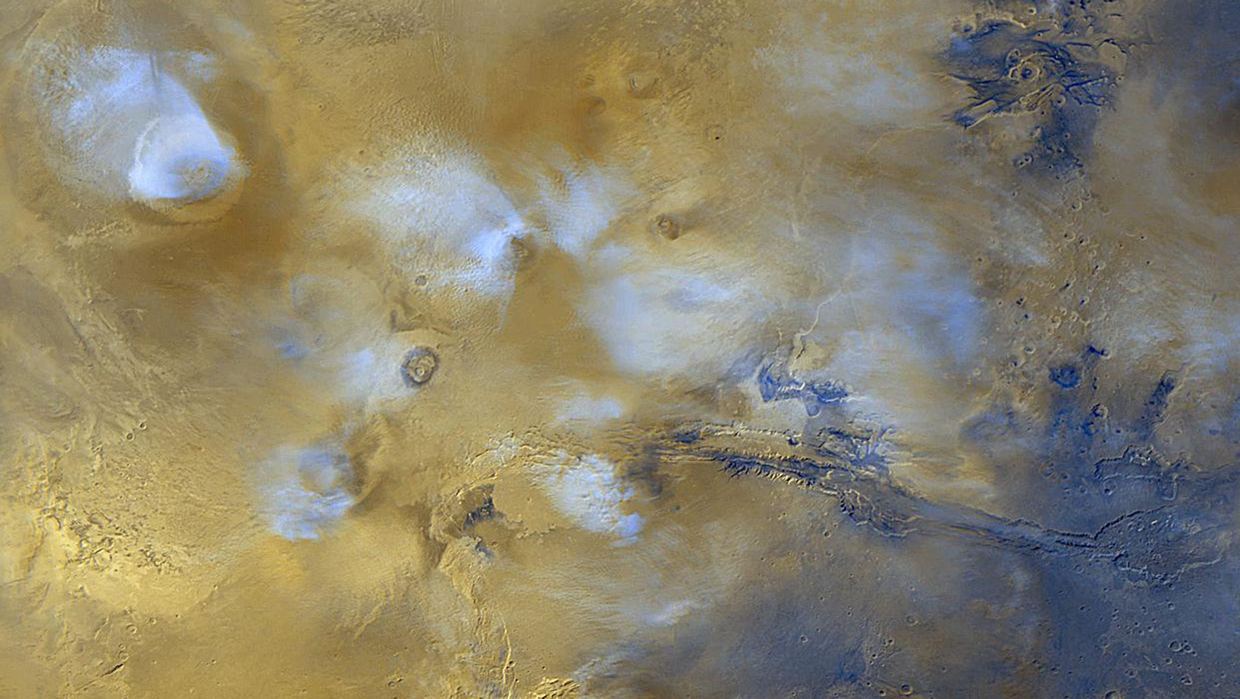
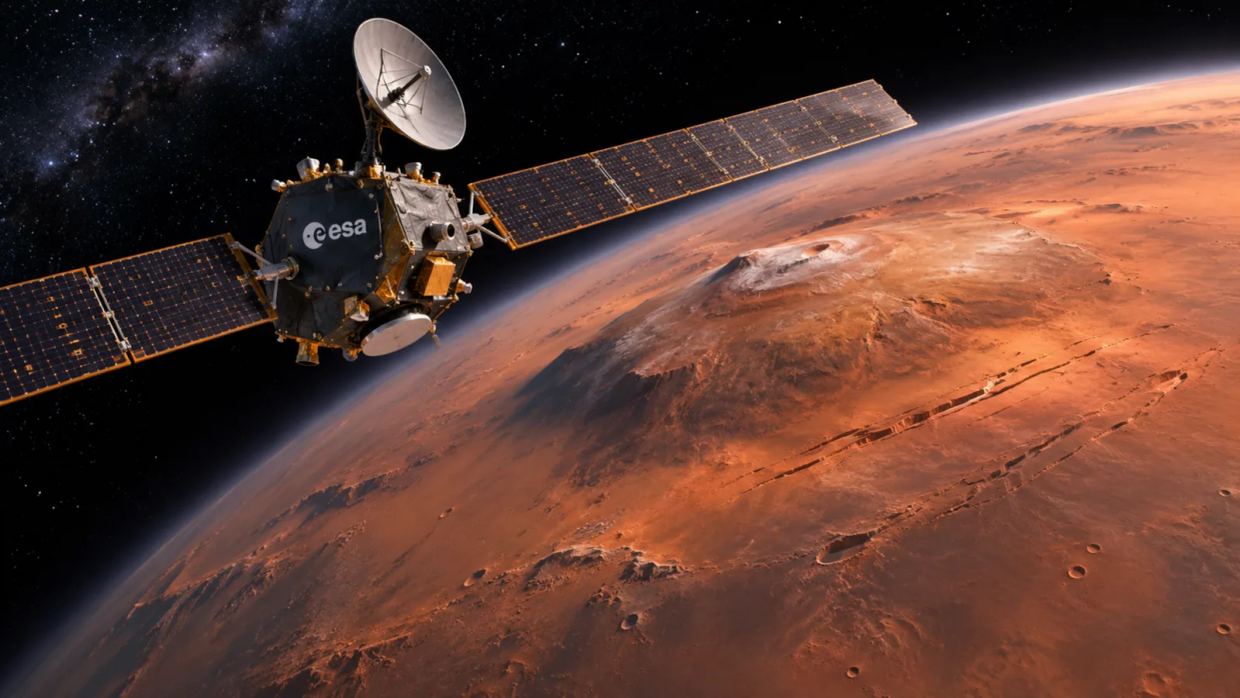
Europe's ExoMars Trace Gas Orbiter (TGO) has recorded a possible signal of hydrogen chloride gas leaking from rifts in the Alba Mons region of Mars, according to a study published in Science Advances on Nov. 4 and reported by Live Science. Alba Mons is the largest volcano on Mars by surface area. The authors interpret the gas as emissions from hot magma beneath the Martian regolith. livescience.com
Live Sciencelivescience.comOpen source ↗
The team says more research is needed to confirm the emissions. First author Alexander Trokhimovskiy of Russia's Space Research Institute described the result as a complementary and potentially independent line of evidence for Martian magma, based on atmospheric observations. livescience.com
Live Sciencelivescience.comOpen source ↗
Hydrogen chloride observations from orbit
TGO first detected hydrogen chloride in the Martian atmosphere in 2021. Researchers were initially cautious about tying it to volcanic activity: the gas appeared seasonal, its distribution was not localized at a possible volcanic region, and other volcanic gases such as sulfur were absent, co-author Kevin Olson of the University of Oxford said. livescience.com
Live Sciencelivescience.comOpen source ↗
Further work showed the gas also appeared in northern-hemisphere winter, not only in the warmer southern spring and summer. Olson caught two observations at the start of northern winter in the first Mars year of the mission and one the following year. They were close to each other in location and time. livescience.com
Live Sciencelivescience.comOpen source ↗
The team then ran a targeted measurement campaign lasting two Mars years, roughly four Earth years. It confirmed the out-of-season signal, which was distinct and pronounced and then fell below the spacecraft's detection threshold. Olson said this pattern suggests a puff of gas entering the atmosphere rather than regular atmospheric chemistry. Over four Mars years of observations the gas appeared locally and nowhere else, though he stressed that the link to volcanism remains a hypothesis. livescience.com
Live Sciencelivescience.comOpen source ↗
Comparison with InSight and hydrothermal vents
NASA's InSight lander interpreted the presence of magma earlier this year from seismic observations and modeling. Co-author Daniel Mège of the Polish Academy of Sciences, who identified the fissures where the gas may emerge, said that InSight detected activity in the crust while TGO detected emissions in the atmosphere. livescience.com
Live Sciencelivescience.comOpen source ↗
The authors suggest Alba Mons may host an environment similar to hydrothermal vents on Earth. Mège noted that Earth's first life-forms came from sites such as hydrothermal zones, which have a similar combination of materials and energy. Magma activity is not in itself a sign of life, and conditions would need to stay favorable for at least millions of years. Maintaining stable conditions over such a period at a very local scale is not obvious, he said. livescience.com
Live Sciencelivescience.comOpen source ↗