Hubble data: 37 dwarf galaxies retain on average about 11% of the oxygen their stars produced
Astronomers of the GLOW project report that dwarf galaxies keep 4–25% of the oxygen made by their stars. The rest was apparently expelled, with supernovae named as the main driver.
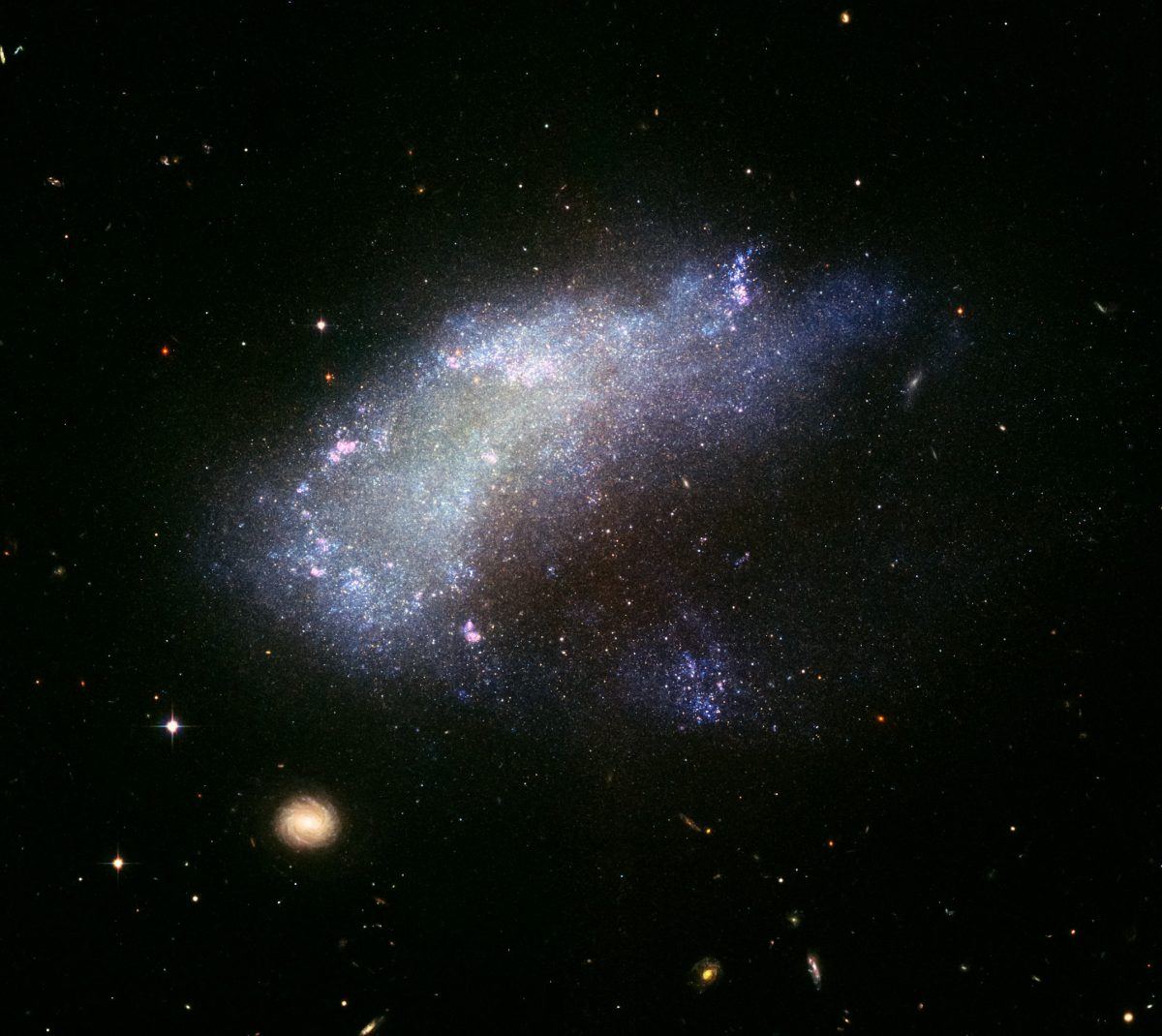
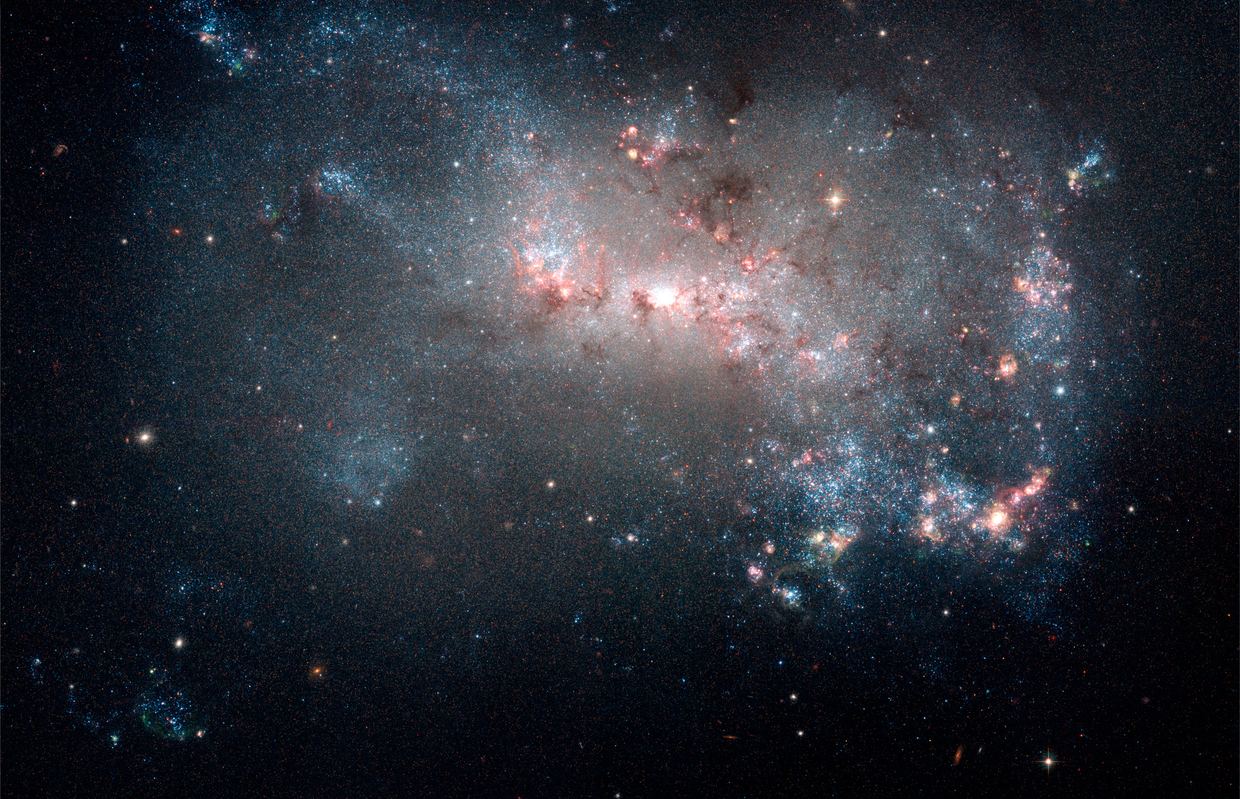
Astronomers from the University of Utah and their colleagues analysed 37 dwarf galaxies within the GLOW (Galaxies Losing Oxygen via Winds) project, Universe Magazine reports. The galaxies lie up to 19.5 million light-years from Earth, and their masses range from 3 million to 3 billion solar masses. The results were published in the Astrophysical Journal universemagazine.com
Universe Magazineuniversemagazine.comOpen source ↗.
According to the study, the dwarf systems retain from 4% to 25% of the oxygen their stars have produced. The average is only about 11% universemagazine.com
Universe Magazineuniversemagazine.comOpen source ↗.
How the oxygen deficit was measured
Using the Hubble Space Telescope, the researchers reconstructed the star-formation history of each galaxy. From it they calculated the theoretical amount of oxygen the stars should have produced over the galaxy's lifetime. They then compared this value with the actual amount of the element in gas, stars and dust, and found a very large deficit universemagazine.com
Universe Magazineuniversemagazine.comOpen source ↗.
Almost all of the remaining oxygen is in interstellar gas, not in new stars or dust clouds universemagazine.com
Universe Magazineuniversemagazine.comOpen source ↗. Dr. Grace Telford of the University of Utah said that oxygen is made by stars inside galaxies, so something must have pushed it out. In her words, this requires the huge energy of massive stars and supernova explosions. The authors regard the data as confirmation of a long-standing hypothesis that supernovae are the main drivers of galactic outflows
universemagazine.com
Universe Magazineuniversemagazine.comOpen source ↗.
Environment and gas halos
The researchers also found a clear dependence of oxygen retention on a galaxy's location. Objects more than 3.3 million light-years from large neighbours consistently kept less than 15% of the oxygen. Galaxies in denser surroundings, or closer than 3.3 million light-years to massive systems, showed a wider scatter and more often retained a higher share universemagazine.com
Universe Magazineuniversemagazine.comOpen source ↗.
This suggests that a dense environment promotes the return of expelled gas, or that galaxies can replenish their reserves with matter enriched by neighbouring systems.
In the gas halos, highly ionised forms of oxygen make up about 1–7% of the total amount produced. Including other ionisation states, a halo may hold 5% to 35% of the oxygen. A significant part of the gas probably overcomes gravity entirely and leaves its home system for good universemagazine.com
Universe Magazineuniversemagazine.comOpen source ↗.
The authors note that current cosmological models still describe these processes incorrectly: they predict that dwarf galaxies should retain considerably more metals than Hubble observations show universemagazine.com
Universe Magazineuniversemagazine.comOpen source ↗. GLOW project lead Dr. Kristen McQuinn of the Space Telescope Science Institute and Rutgers University said oxygen was chosen for practical reasons, as one of the main elements formed by stars. Tracing it helps to understand galaxy evolution and how galaxies enrich intergalactic space.