Artemis II launch opened 5,000-km holes in the ionosphere, a preprint from Taiwan reports
Researchers at National Cheng Kung University found that the SLS launch changed ionospheric electron density by amounts equivalent to GPS errors of several meters.

The launch of NASA's Artemis II mission in April 2026 caused significant disturbances in Earth's ionosphere that could have triggered temporary, localized errors in GPS positioning, Space.com reports, citing a new study by researchers at National Cheng Kung University in Taiwan space.com
Space.comspace.comOpen source ↗. The work was published as a preprint in the journal Geophysical Research Letters
space.com
Space.comspace.comOpen source ↗.
How the ionosphere was measured
The team analyzed data from high-precision networks of fixed ground-based GPS receivers. U.S. scientific institutions use these networks to measure minuscule motions of tectonic plates. By measuring how long GPS signals take to travel from space to ground stations, the researchers reconstructed how the passage of the Space Launch System (SLS) rocket changed the concentration of free electrons in the ionosphere, the electrically charged layer of the atmosphere above 30 miles (50 kilometers) space.com
Space.comspace.comOpen source ↗.
A GPS receiver determines its position by measuring the distance to four satellites. When electron concentration changes, the signal arrives faster or slower, and the measurement becomes inaccurate. GPS and other GNSS satellites orbit at about 12,550 miles (20,200 kilometers), so their signals must cross the ionosphere space.com
Space.comspace.comOpen source ↗.
Two holes across the continent
According to the study, the disturbances were more significant than any caused by other rocket launches to date and up to ten times more intense than those observed after the Starship test launches. Starship is twice as powerful as the SLS by liftoff thrust space.com
Space.comspace.comOpen source ↗. The researchers observed two "holes": one left by the 212-foot (65-meter) SLS core stage, the other by two subsequent burns of the upper stage. Both stretched across the American continent from east to west for about 3,100 miles (5,000 kilometers)
space.com
Space.comspace.comOpen source ↗.
The two upper-stage burns took place at altitudes of around 115 miles (185 kilometers), more than an hour after liftoff, and allowed the Orion capsule to leave Earth's gravity and head for the moon. Despite the power of the core stage, the disturbance from these burns, made directly inside the ionosphere, was far more prominent space.com
Space.comspace.comOpen source ↗.
Ground stations detected changes in electron density equivalent to positioning errors of several meters space.com
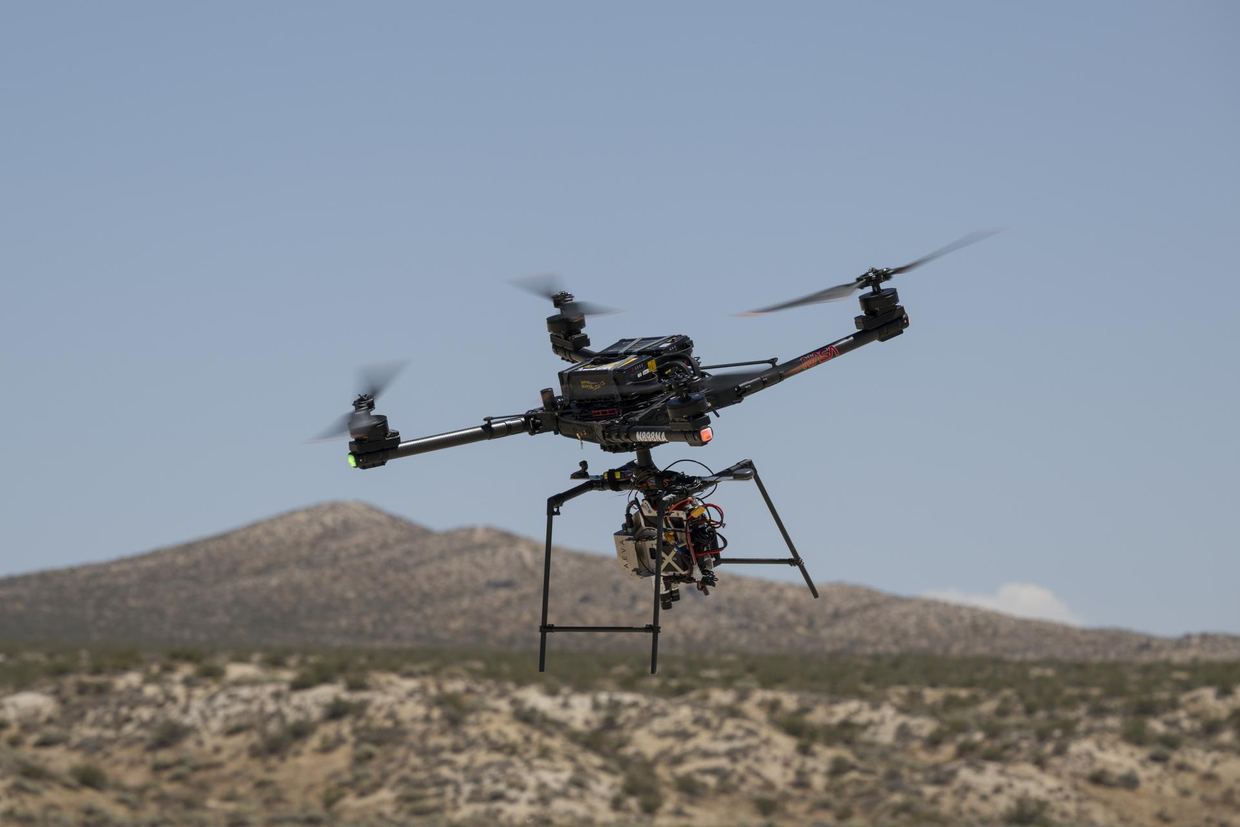
Space.comspace.comOpen source ↗. Co-author Charles Lin, a professor of earth science at the university, told Space.com that an error of a couple of meters is enough to make an autonomous car change lanes and could also affect drone positioning
space.com
Space.comspace.comOpen source ↗. He added that such an orbital maneuver had not been observed before in an interplanetary mission
space.com
Space.comspace.comOpen source ↗. Unlike severe solar storms, which can disrupt GPS for days, the effect of a rocket launch is much shorter-lived
space.com
Space.comspace.comOpen source ↗.