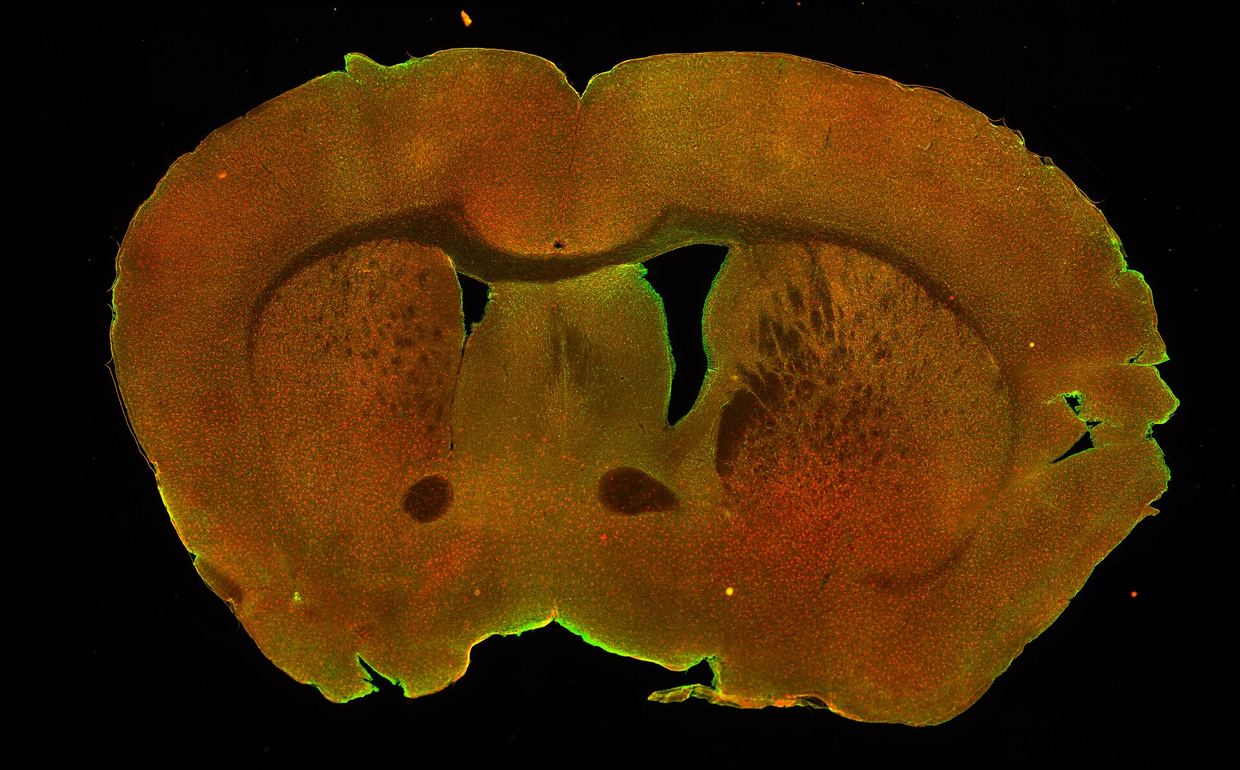
Emory University: fMRI shows hexagonal grid-like activity in the brain during emotion evaluation in 18 people
Neuroscientists at Emory University detected a sixfold-symmetry signature in the ventromedial prefrontal cortex as 18 participants evaluated emotional stimuli. The sample is small; the role of the pattern is not established.

A team from Emory University has detected a hexagonal, grid-like signature in human brain activity while people evaluated emotional information. Neuroscientists Yumeng Ma and Philip A. Kragel described the result in a paper in PLOS Biology, as reported by ScienceAlert. The study included 18 participants and used non-invasive functional magnetic resonance imaging (fMRI). sciencealert.com
ScienceAlertsciencealert.comOpen source ↗
The authors write that the findings suggest emotion knowledge is structured by a grid-like coordinate system in the human brain. sciencealert.com
ScienceAlertsciencealert.comOpen source ↗
Emotion map and grid cells
For decades, researchers have described emotions along two axes: valence (how pleasant or unpleasant an emotion is) and arousal (how calming or activating it is). Together they form the affective circumplex, a two-dimensional map of emotional concepts. sciencealert.com
ScienceAlertsciencealert.comOpen source ↗
Grid cells were first identified in rats in 2005. These neurons become active at locations that form a repeating pattern of equilateral triangles, a grid with sixfold (hexagonal) symmetry. Different grid cells respond to different arrangements of locations, giving the brain a coordinate system for tracking position. Earlier studies found similar activity patterns in the organization of abstract information, from visual concepts to the relative value of choices. sciencealert.com
ScienceAlertsciencealert.comOpen source ↗
What the experiment showed
Participants were shown facial expressions morphing from one emotion to another and sequences of emotionally evocative phrases. Each stimulus involved a transition across the affective circumplex, so the researchers could follow brain activity as participants moved through this two-dimensional emotional space. sciencealert.com
ScienceAlertsciencealert.comOpen source ↗
In the ventromedial prefrontal cortex, activity varied with the direction of movement through the emotional map, following a repeating pattern of sixfold symmetry, as grid-like coding does during navigation of physical space. The pattern appeared both for faces and for written phrases, which, according to the authors, suggests the brain encoded relationships between emotional concepts rather than only reacting to what was seen. sciencealert.com
ScienceAlertsciencealert.comOpen source ↗
Brain activity also reflected the distance between emotional concepts on the circumplex, and this signal was associated with how participants judged changes in emotional information. sciencealert.com
ScienceAlertsciencealert.comOpen source ↗
Limitations
The cohort of 18 people is small. Further research is needed to understand how this grid-like system operates and whether it plays a direct role in processing emotional information. sciencealert.com
ScienceAlertsciencealert.comOpen source ↗
The authors write that the structure seen in self-report may reflect how the brain organizes emotion knowledge using mechanisms similar to those implicated in spatial and conceptual navigation. sciencealert.com
ScienceAlertsciencealert.comOpen source ↗
Sources · 1
Found a mistake?Read also