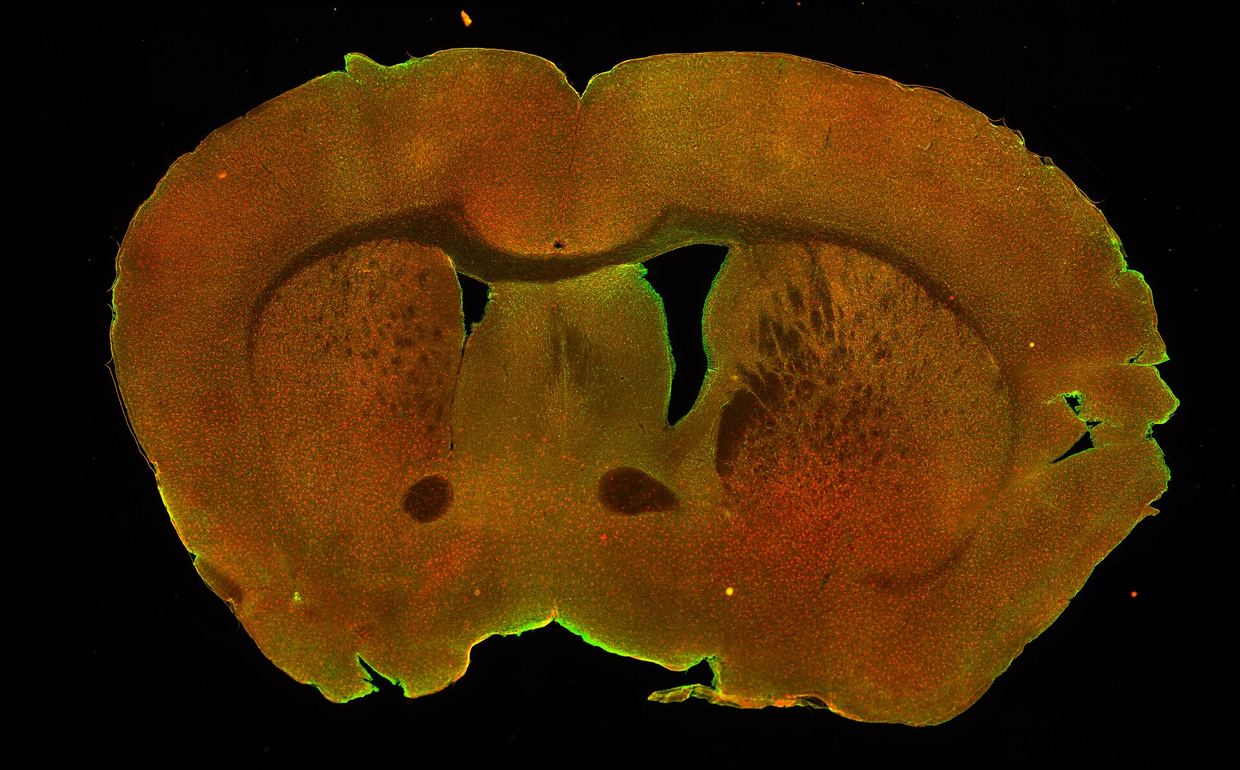
Padua researchers show thrombin cuts six amino acids from α-synuclein in vitro
Nature Communications study from the University of Padua: the enzyme thrombin truncates α-synuclein, a protein linked to Parkinson's disease, in vitro and in a complex biological medium.

Researchers at the Department of Pharmaceutical Sciences, University of Padua, report that the enzyme thrombin selectively cleaves α-synuclein, a protein whose abnormal accumulation in the brain is linked to Parkinson's disease, according to Le Scienze. The study, "Thrombin reshapes α-synuclein biochemical properties by N-terminal truncation", was published on 28 October 2026 in Nature Communications. lescienze.it
Le Scienzelescienze.itOpen source ↗ The reaction was observed in vitro and in a complex biological environment that mimics in vivo conditions.
lescienze.it
Le Scienzelescienze.itOpen source ↗
Parkinson's disease is the second most common neurodegenerative disorder after dementia. According to the Istituto Superiore di Sanità, the number of cases will double by 2050, only partly because of population ageing; the causal determinants are still largely unknown.
Thrombin and α-synuclein
Thrombin is an enzyme involved in blood coagulation and in some neuroinflammation processes. α-Synuclein takes part in regulating neurotransmitter transport at synapses. Fragments of α-synuclein are found in post mortem brains of patients with Parkinson's disease, but how they form and what role they play in the onset of the disease is not known. lescienze.it
Le Scienzelescienze.itOpen source ↗
The group combined thrombin and α-synuclein and observed that thrombin produces truncated α-synuclein by removing six amino acids from its N-terminal part. lescienze.it
Le Scienzelescienze.itOpen source ↗ According to the authors, the experiment was repeated several times in vitro with the same result. First author Philipp Trolese said the team had initially been looking for proteases that do not cleave α-synuclein, and thrombin seemed a good candidate in theory; in practice, the cleavage was highly reproducible.
Characterisation and next steps
In the second part of the work, the researchers characterised the truncated form of α-synuclein and studied its physiological functions and those associated with pathological conditions, using a series of advanced biophysical techniques. lescienze.it
Le Scienzelescienze.itOpen source ↗ The authors report that thrombin selectively modifies the structure, aggregation and function of α-synuclein, and say it could therefore contribute to the development of the disease.
lescienze.it
Le Scienzelescienze.itOpen source ↗
The authors suggest the result could point to a link between neuroinflammation and Parkinson's disease. The fragment has so far been detected in vitro. The next step is to determine whether it also forms in patients and, subsequently, whether forms of treatment for this progressive degenerative disease can be envisaged. lescienze.it
Le Scienzelescienze.itOpen source ↗
Sources · 1
Found a mistake?Read also