University of Nottingham: 20 g daily inulin cut knee osteoarthritis pain by 1.1 points in six weeks
In a six-week trial of adults with knee osteoarthritis, published in Nutrients, daily inulin lowered pain on a ten-point scale; the authors note it does not replace exercise or physiotherapy.
Researchers at the University of Nottingham reported in the journal Nutrients that daily intake of the plant fiber inulin reduced knee pain in people with knee osteoarthritis, according to ad-hoc-news.de. ad-hoc-news.de
ad-hoc-news.dead-hoc-news.deOpen source ↗ The six-week trial assessed pain, physical function and metabolic parameters. A total of 177 adults were split into four groups. In the detailed analysis of 136 patients, with a mean age of 68 and mostly women, 117 completed the study.
Trial design and pain results
Participants were assigned to one of four arms: 20 g of inulin daily, a structured physiotherapy exercise program, a combination of both, or a placebo group taking 10 g of maltodextrin daily. Inulin lowered knee pain by 1.1 points on a ten-point scale; compared with placebo, the reduction was 1.11 points. Physiotherapy gave a reduction of 1.55 to 1.6 points, and the combination of inulin and exercises gave 1.7 points.
Study lead Afroditi Kouraki stated that both single interventions were statistically significant and exceeded the one-point threshold for clinical relevance. The dropout rate was 3.6 percent in the inulin group, compared with 21 percent in the physiotherapy-only group.
Mechanism, limits and dietary sources
Inulin also improved grip strength and reduced pain sensitivity, while the physiotherapy exercises mainly improved walking and standing up. ad-hoc-news.de
ad-hoc-news.dead-hoc-news.deOpen source ↗ As a prebiotic, inulin promotes the formation of butyrate and the release of the body's own GLP-1. Higher GLP-1 levels were associated with stronger grip in the study, but no causal evidence exists. No direct link between short-chain fatty acids and pain was found.
Kouraki described inulin as safe, well tolerated and effective, but the results do not show that the fiber regenerates cartilage. The Nottingham researchers state that inulin should only complement established pillars such as regular exercise, weight management and physiotherapy, not replace them, and that larger long-term studies are needed for final assessments.
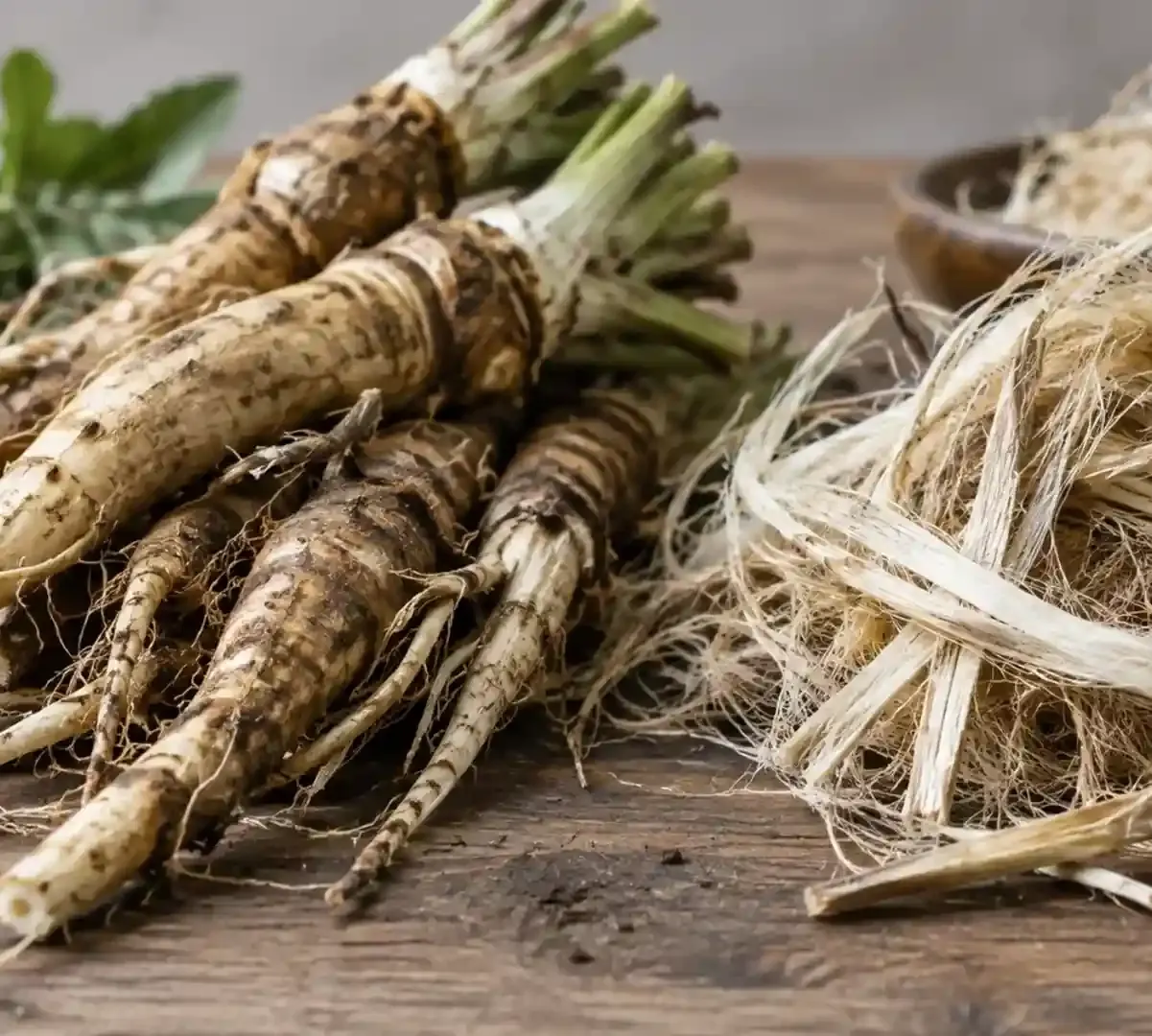
Inulin occurs naturally in chicory root, onions and Jerusalem artichoke. According to the International Journal of Biological Macromolecules, per 100 g Jerusalem artichoke contains 14–19 g, garlic 9–16 g, onions 2–6 g, and salsify or burdock root 3.5–4 g. Intake that is too fast and too high can cause bloating, and inulin is considered unsuitable for people with irritable bowel syndrome.
For context, about 242 million people worldwide are affected by knee or hip osteoarthritis, and about 25 percent of the US population suffers from chronic knee pain. Severe osteoarthritis is associated with a 55 percent higher risk of premature death. ad-hoc-news.de
ad-hoc-news.dead-hoc-news.deOpen source ↗