Texas A&M and Rice: diamond composite turns partly to graphite under Mach 8.45 impact
Aluminum projectiles hit a diamond composite at up to Mach 8.45; parts of it turned to graphite within microseconds, dispersing impact energy, the authors report.

Researchers at Texas A&M University and Rice University fired aluminum projectiles at an engineered diamond composite at speeds of up to Mach 8.45, roughly 6,500 miles per hour, and recorded part of the target turning into graphite, Interesting Engineering reports. interestingengineering.com
Interesting Engineeringinterestingengineering.comOpen source ↗ The work was led by doctoral candidate Aniket Mote and Dr. Thomas Lacy of Texas A&M and was published in Materials Today.
interestingengineering.com
Interesting Engineeringinterestingengineering.comOpen source ↗
The target withstood the strikes. Within microseconds of impact, portions of the composite changed at the atomic scale from diamond to graphite. interestingengineering.com
Interesting Engineeringinterestingengineering.comOpen source ↗ According to the authors, this phase transition let the material act as a shock absorber: the softer carbon structure of graphite dispersed kinetic energy at the molecular level.
interestingengineering.com
Interesting Engineeringinterestingengineering.comOpen source ↗ The study examines how hard materials change their internal structure under intense mechanical stress.
interestingengineering.com
Interesting Engineeringinterestingengineering.comOpen source ↗
How the target was made and tested
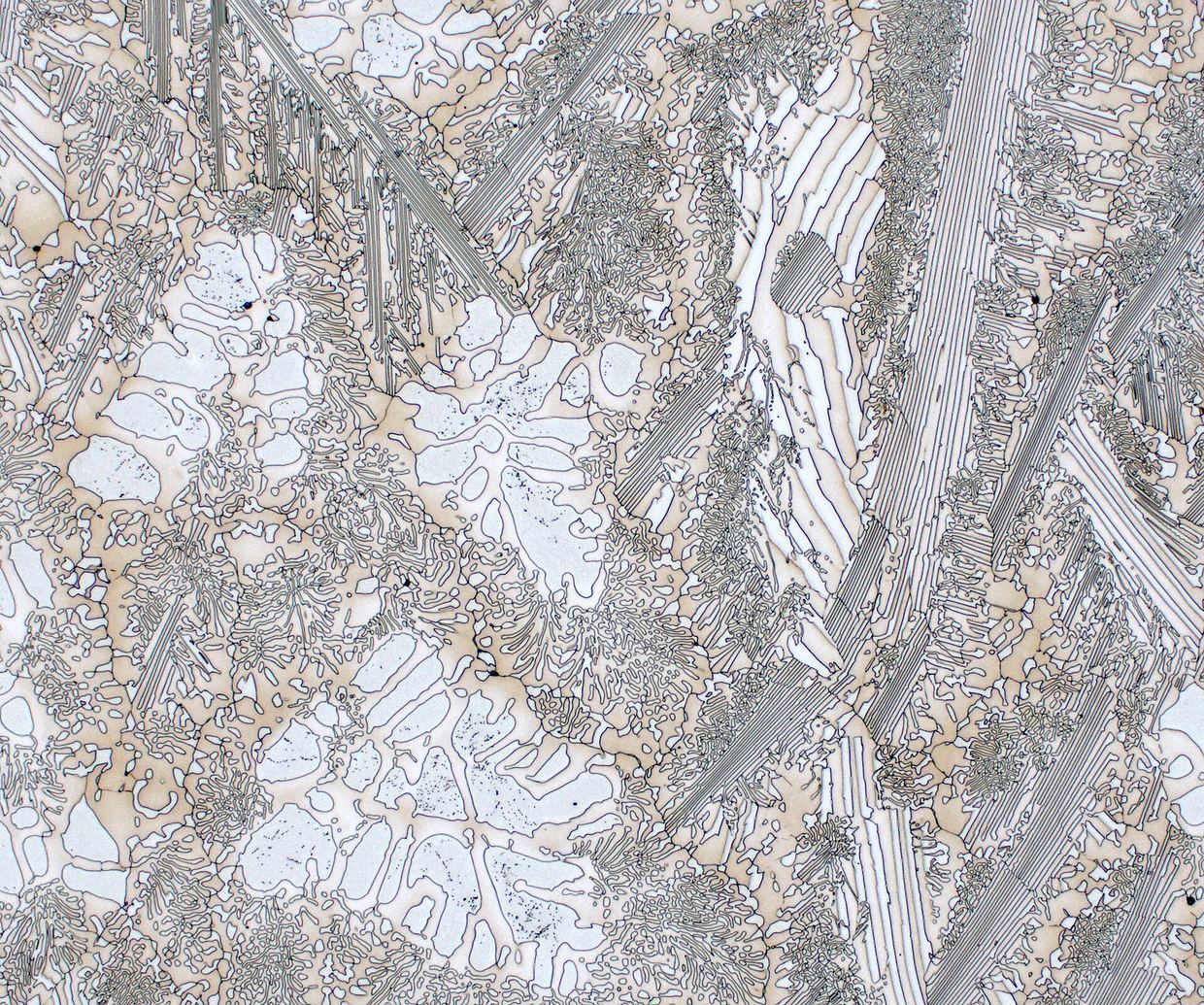
Rice University scientists made the composite by binding small diamond grains with cubic boron nitride and cobalt using spark plasma sintering. This process is intended to avoid the melting that occurs in traditional high-temperature methods. interestingengineering.com
Interesting Engineeringinterestingengineering.comOpen source ↗
Tests were carried out at the Hypervelocity Impact Laboratory (HVIL) at Texas A&M with a 45-foot two-stage light gas gun. interestingengineering.com
Interesting Engineeringinterestingengineering.comOpen source ↗ In the first test the team launched a cluster of 1 mm aluminum "buckshot" projectiles at nearly Mach 7.5. In the second test a single 4 mm aluminum projectile reached speeds approaching Mach 8.45, Mote said.
interestingengineering.com
Interesting Engineeringinterestingengineering.comOpen source ↗ High-speed cameras and ultra-fast sensors recorded the change in microstructure in real time.
interestingengineering.com
Interesting Engineeringinterestingengineering.comOpen source ↗
"We found that portions of the diamond composite had transformed into graphite," Lacy said. "It was exciting to observe this phase change in real time." interestingengineering.com
Interesting Engineeringinterestingengineering.comOpen source ↗
Relevance for materials under extreme loads
Hypersonic flight and space exploration expose structural materials to rapid deformation, high pressure and sudden failure. interestingengineering.com
Interesting Engineeringinterestingengineering.comOpen source ↗ Experiments that reproduce such loads record phase changes in real time and show how super-hard composites move between atomic states under shock.
interestingengineering.com
Interesting Engineeringinterestingengineering.comOpen source ↗
Lacy said the diamond-to-graphite transformation could help guide the design of next-generation materials for extreme environments. interestingengineering.com
Interesting Engineeringinterestingengineering.comOpen source ↗