Early-onset colorectal tumors show a placenta-like protein program in patient samples and organoids
Italian teams (Niguarda, IFOM, INGM) linked early-onset colorectal cancer to reactivated HERVH sequences; in organoids, ATR inhibitors reduced viability. The result is preclinical.
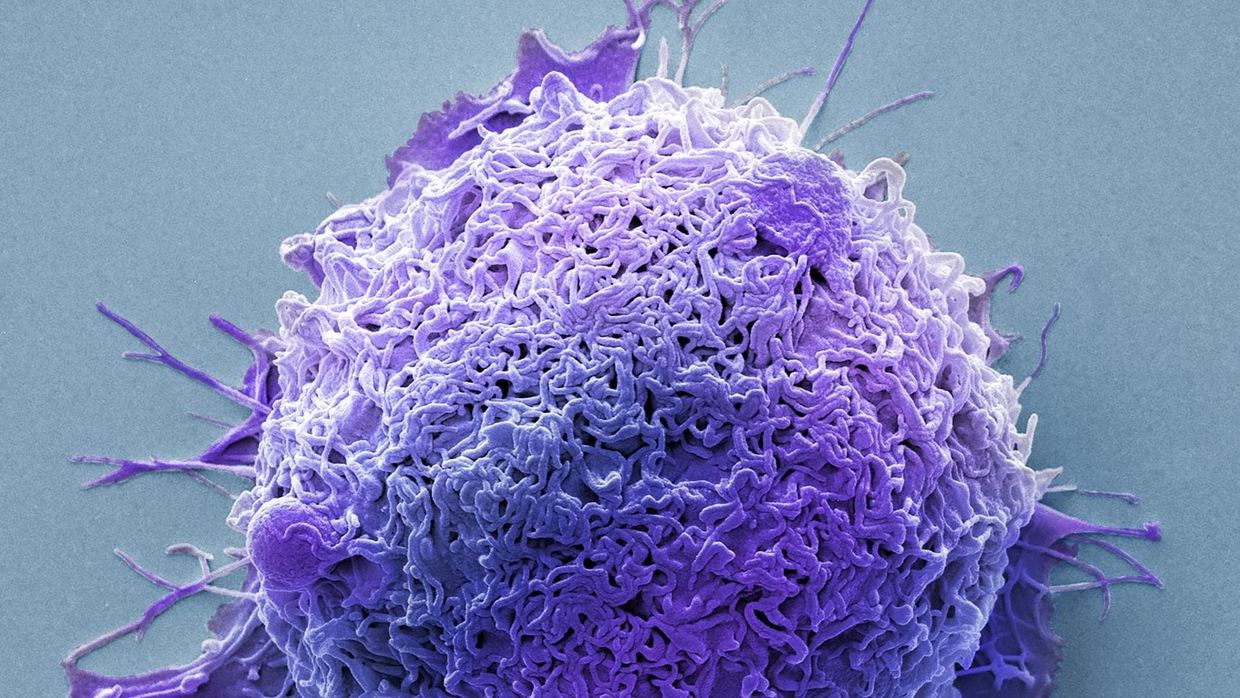
On 3 November 2026, Le Scienze reported a study by researchers from Niguarda Metropolitan Hospital, IFOM, INGM and the universities of Milan and Turin, published in Cell Press Blue. Colorectal cancer is becoming more common in adults under 50, and the authors looked for molecular differences between tumors in younger and older patients. In tumors of young patients they identified a molecular program similar to the one active in the placenta lescienze.it
Le Scienzelescienze.itOpen source ↗.
To find the differences, the researchers compared proteins in samples from patients with later-onset and early-onset tumors. They found a set of proteins associated with the trophoblast, the cell component that helps form the placenta. This "placental signature" includes proteins that help cells interact with the immune system, invade tissue and respond to problems during DNA replication. The protein analysis was combined with studies of DNA, RNA and tissue lescienze.it
Le Scienzelescienze.itOpen source ↗.
HERVH and YAP in tumor growth
In early-onset tumors the group detected reactivation of HERVH, a family of sequences derived from ancient retroviruses and integrated into human DNA. These sequences are normally inactive in most adult cells but take part in regulating embryonic and placental development lescienze.it
Le Scienzelescienze.itOpen source ↗.
To test whether HERVH supports growth, the authors used organoids, three-dimensional cultures derived from patient tumor samples. In organoids with high HERVH levels, antisense oligonucleotides designed to bind HERVH RNA reduced its amount. The organoids then grew less, and expression of LGR5, a marker of stem-like tumor cells, also fell lescienze.it
Le Scienzelescienze.itOpen source ↗.
The group also examined YAP, a protein that helps cells respond to mechanical forces and is involved in placental development. In organoids, blocking YAP reduced both HERVH RNA and the viability of tumor cells. In patient tissue the researchers observed changes in the shape of cell nuclei and in the organization of the extracellular matrix, which the authors describe as compatible with a mechanically altered environment lescienze.it
Le Scienzelescienze.itOpen source ↗.
ATR inhibitors and study limits
Tumors of younger patients contained more proteins that help cells cope with DNA replication problems. The group therefore tested two compounds that inhibit ATR, a protein involved in this protective response. Organoids with higher HERVH levels were more sensitive and showed lower cell viability lescienze.it
Le Scienzelescienze.itOpen source ↗.
Alberto Bardelli, scientific director of IFOM, stressed that this is a preclinical result that must be confirmed in larger case series and experimental studies. The study was coordinated by Salvatore Siena, Vincenzo Costanzo, Beatrice Bodega and Alberto Bardelli; the co-first authors are Gianluca Mauri, Lucia Santorelli and Federica Marasca. Samples came from patients treated at Niguarda and other Italian and Spanish centers lescienze.it
Le Scienzelescienze.itOpen source ↗.