ORNL neutron diffraction shows mechanical squeeze changes magnetism in altermagnet crystals
Oak Ridge National Laboratory squeezed small crystals of manganese telluride and iron sulfide between titanium plates and recorded changes in magnetic domains and the anomalous Hall effect.

Researchers at the US Department of Energy's Oak Ridge National Laboratory (ORNL) used neutrons to show how a small mechanical squeeze changes the magnetic behavior of altermagnets, an emerging class of magnetic materials, according to ornl.gov ornl.gov
ornl.govornl.govOpen source ↗. The results appeared in two back-to-back papers, in Physical Review X and Advanced Materials
ornl.gov
ornl.govornl.govOpen source ↗. The authors suggest that mechanical strain could be a simple way to control magnetism and electron flow in these materials
ornl.gov
ornl.govornl.govOpen source ↗.
Experiment: squeezing crystals between titanium plates
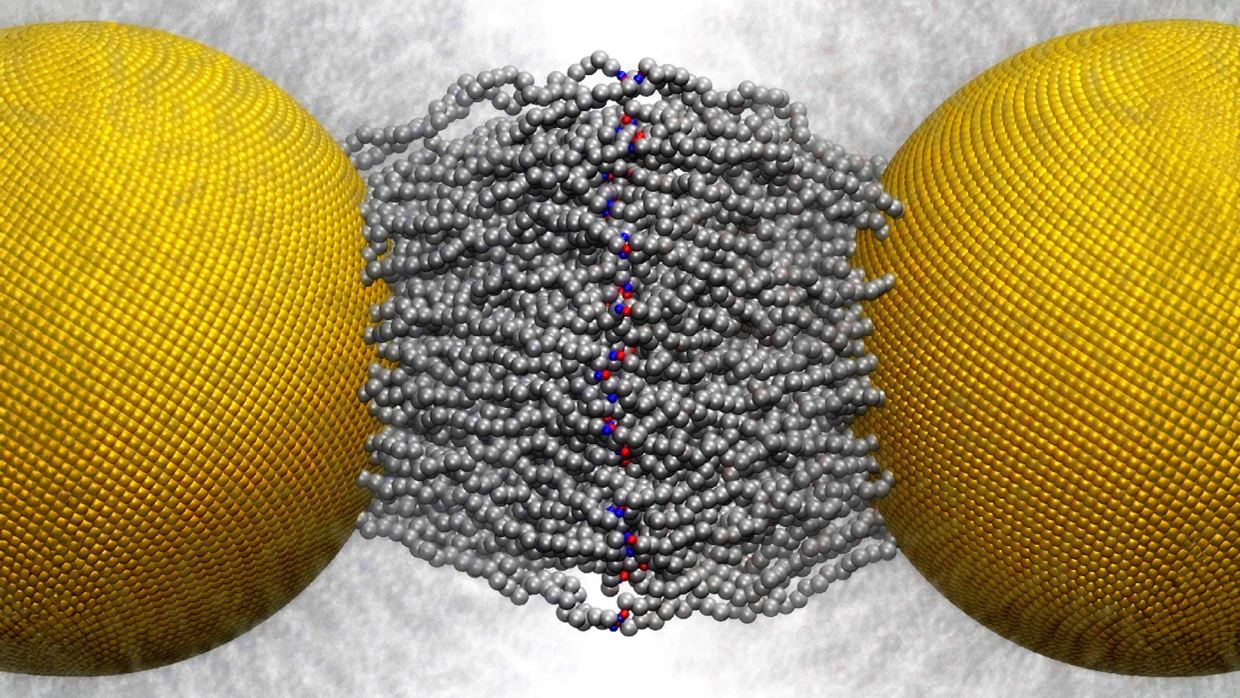
The team placed tiny crystals of manganese telluride and iron sulfide between two titanium plates and squeezed them ornl.gov
ornl.govornl.govOpen source ↗. Neutron diffraction at ORNL's Spallation Neutron Source, a DOE Office of Science user facility, showed that the mechanical strain altered the populations of magnetic domains in the materials
ornl.gov
ornl.govornl.govOpen source ↗. The strain also changed an electrical response known as the anomalous Hall effect
ornl.gov
ornl.govornl.govOpen source ↗.
The papers are "Strain-Tunable Anomalous Hall Effect in Hexagonal MnTe" in Physical Review X and "Uniaxial Strain Tuned Magnetism of the Altermagnet Candidate H-FeS" in Advanced Materials. Pengcheng Dai of Rice University, a former neutron scientist at ORNL, is among the authors of both. "By controlling the magnetic domains, we can directly influence the transport behavior, and that opens the door to exploring these materials for spintronic technologies," Dai said ornl.gov
ornl.govornl.govOpen source ↗.
Spintronics context
Spintronics, short for spin electronics, uses electron spin in addition to charge to store and process data, whereas traditional electronics relies solely on charge ornl.gov
ornl.govornl.govOpen source ↗. According to ORNL, once the right foundational materials are discovered, including altermagnets, spintronics could advance technologies from wireless communication to quantum computing
ornl.gov
ornl.govornl.govOpen source ↗.
Feng Ye, an ORNL neutron scientist and co-author of both publications, said that one creative experimental idea, a small mechanical squeeze between two plates, can reveal entirely new magnetic behavior. He added that neutron scattering plays a critical role in revealing the underlying change in magnetism ornl.gov
ornl.govornl.govOpen source ↗.