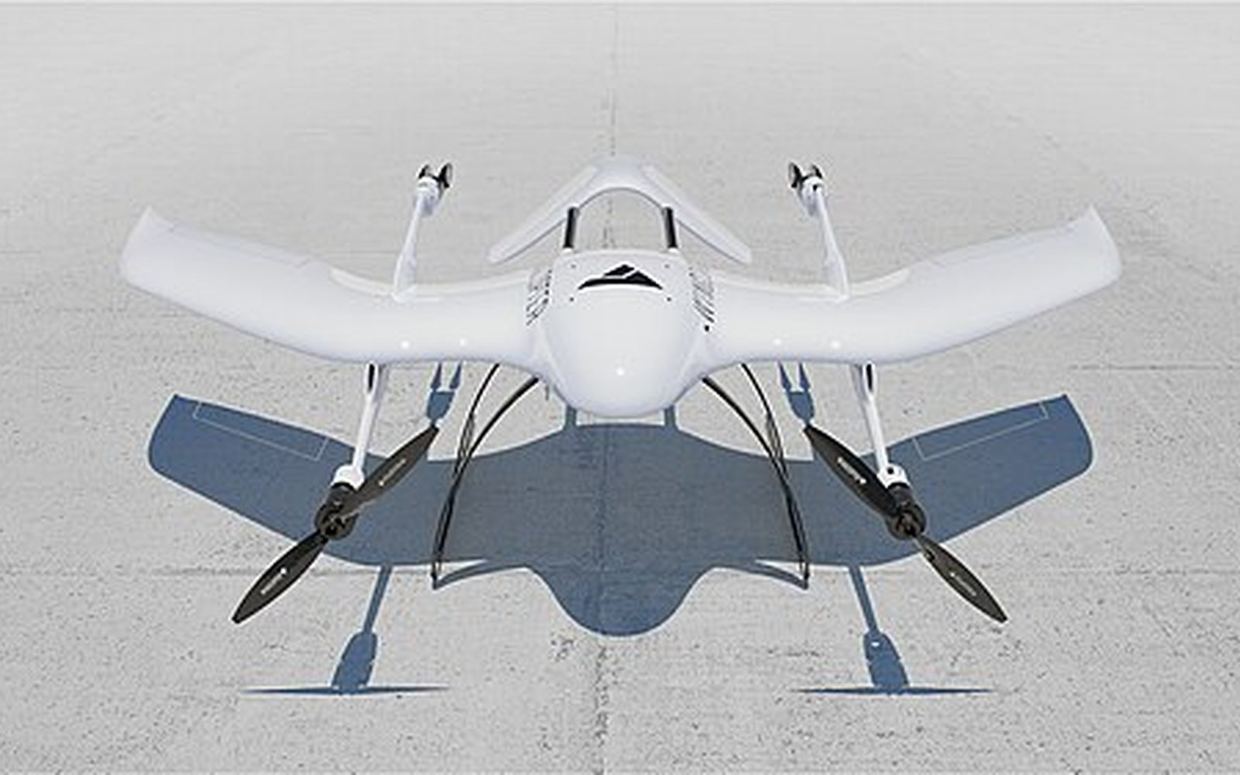
ETH Zurich's FlexiQuad prototype drone flies at 80 km/h and survives 25 km/h collisions
ETH Zurich researchers built a prototype quadcopter whose deformable ring frame absorbs impacts, so it keeps flying after hitting obstacles at about 25 km/h.

Researchers at ETH Zurich have developed FlexiQuad, a four-rotor drone with a deformable, ring-shaped frame that absorbs impacts and stays airborne, Interesting Engineering reports. According to the researchers, the prototype flies at up to 80 km/h and withstood collisions with obstacles at around 25 km/h interestingengineering.com
Interesting Engineeringinterestingengineering.comOpen source ↗.
Ring frame instead of rigid arms
Conventional quadcopters have a rigid frame with four arms extending from a central body. FlexiQuad has no central fuselage: the four rotors, the batteries and the flight-control module are distributed along the ring interestingengineering.com
Interesting Engineeringinterestingengineering.comOpen source ↗.
The frame deforms laterally when it meets an obstacle but remains stiff in the vertical direction. This lets it absorb collision energy without losing the force transmission the rotors need. The authors took the idea from the wings of birds and insects, which bend in some directions and stay relatively rigid in others interestingengineering.com
Interesting Engineeringinterestingengineering.comOpen source ↗.
Collision tests and payload
In the tests, the drone was flown into obstacles at speeds of up to about 25 km/h. The frame deformed temporarily, the forces on the structure were reduced, and the drone continued to fly. The researchers said the test speed was limited mainly by the space available to accelerate the drone before impact interestingengineering.com
Interesting Engineeringinterestingengineering.comOpen source ↗.
According to Girardi, linear and angular accelerations of FlexiQuad are comparable to those of rigid drones. The flexible structure can also grasp objects: in demonstrations the drone picked up, carried and set down a soft first-aid kit, and it lifted a payload heavier than its own weight interestingengineering.com
Interesting Engineeringinterestingengineering.comOpen source ↗.
The design is modular. The airframe materials cost less than 15 Swiss francs, and the frame can be opened and folded into a compact form that fits inside a medium-sized suitcase. Quick-release fasteners and slide-in batteries could eventually allow rapid assembly on site interestingengineering.com
Interesting Engineeringinterestingengineering.comOpen source ↗.
Autonomous operation remains a technical challenge. After a collision, vibrations of the flexible frame can blur camera images and interfere with navigation. The researchers are working on a way for the drone to stabilise itself after impact using onboard motion sensors and then resume autonomous flight. They are also checking whether measurements of frame deformation and vibration can give flight control additional information interestingengineering.com
Interesting Engineeringinterestingengineering.comOpen source ↗.
The developers name inspections of ship ballast tanks, search-and-rescue inside collapsed buildings and environmental measurements in dense forests as possible uses interestingengineering.com
Interesting Engineeringinterestingengineering.comOpen source ↗.