Japanese team finds all five DNA and RNA nucleobases in Hayabusa2 samples of asteroid Ryugu
Two samples returned by JAXA's Hayabusa2 in 2020 contain adenine, guanine, cytosine, thymine and uracil in roughly similar amounts. Bennu samples gave the same set.
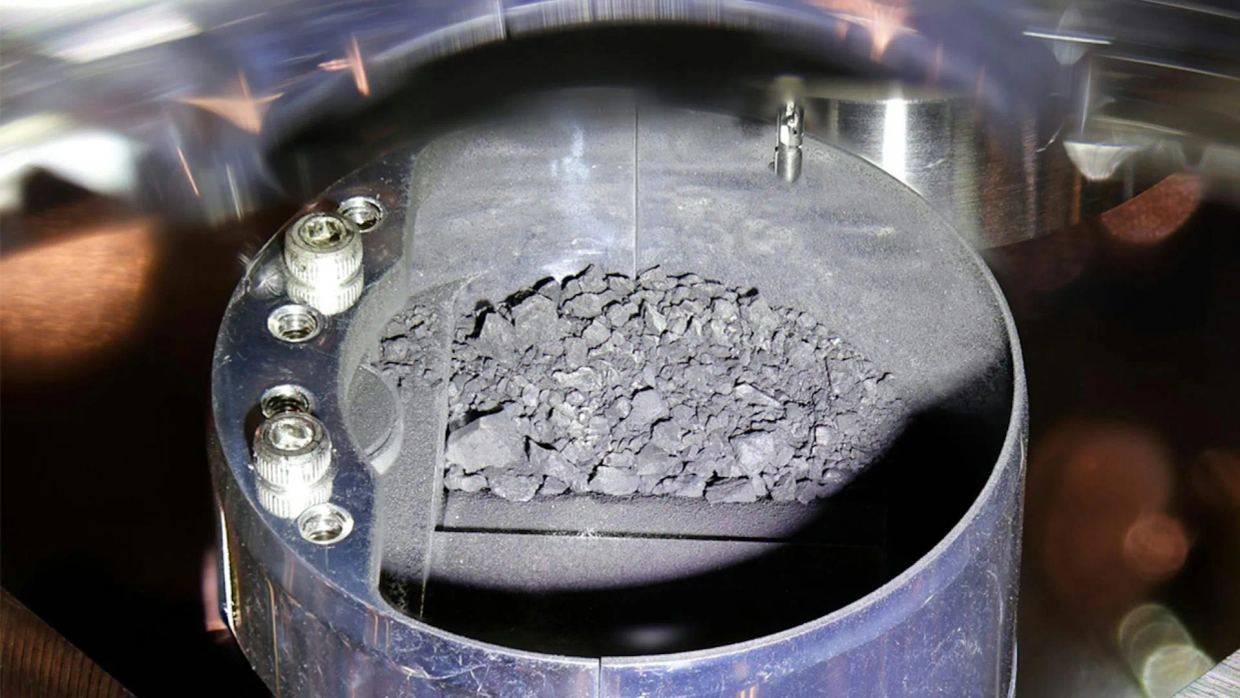
Japanese researchers have detected all five canonical nucleobases (adenine, guanine, cytosine, thymine and uracil) in samples of the carbonaceous asteroid (162173) Ryugu, according to a study in Nature Astronomy covered by sciencedaily.com sciencedaily.com
sciencedaily.comsciencedaily.comOpen source ↗. The material was returned to Earth in 2020 by the Hayabusa2 mission of the Japan Aerospace Exploration Agency (JAXA). The authors analysed two Ryugu samples and found all five molecules in both, in roughly similar amounts
sciencedaily.com
sciencedaily.comsciencedaily.comOpen source ↗.
In 2023 an international team had reported one of these nucleobases, uracil, in the Ryugu samples. The new work extends that result to the full set sciencedaily.com
sciencedaily.comsciencedaily.comOpen source ↗.
Samples and method
Hayabusa2 delivered a total of 5.4 grams of asteroid material. Working with it requires ultra-clean laboratory conditions to avoid contamination. The researchers extracted organic molecules with water and hydrochloric acid, then purified them for detection sciencedaily.com
sciencedaily.comsciencedaily.comOpen source ↗.
Nucleobases are nitrogen-containing organic molecules that carry genetic information in DNA and RNA. Adenine and guanine are purines; cytosine, thymine and uracil are pyrimidines. Combined with sugars and phosphates, they form nucleotides, the building blocks of genetic material sciencedaily.com
sciencedaily.comsciencedaily.comOpen source ↗.
Comparison with meteorites and Bennu
The result agrees with earlier data on space rocks. The Murchison meteorite, which fell in Australia in 1969, and the Orgueil meteorite, which fell in France in 1864, have yielded a wide range of organic molecules, including nucleobases. Meteorites can be contaminated during their fall and on Earth, but pristine samples from NASA's mission to asteroid Bennu also yielded all five nucleobases in 2025 sciencedaily.com
sciencedaily.comsciencedaily.comOpen source ↗.
The bodies differ in composition. Murchison is enriched in purines, while Bennu and Orgueil contain more pyrimidines. Ammonia is thought to influence this balance sciencedaily.com
sciencedaily.comsciencedaily.comOpen source ↗. The proportions of purines and pyrimidines vary with the chemical environment and history of each asteroid
sciencedaily.com
sciencedaily.comsciencedaily.comOpen source ↗.
Ryugu, Bennu and the parent body of Orgueil are remnants of the early Solar System and can preserve material largely unchanged for about 4.5 billion years. Because the Ryugu samples were collected directly in space and protected from terrestrial contamination, they provide a relatively clean view of that chemistry. According to the summary of the study, the results suggest that key components of genetic material may have formed in space and later been delivered to the early Earth sciencedaily.com
sciencedaily.comsciencedaily.comOpen source ↗.