Aarhus University: Danish Mesolithic microliths fit poisoned arrows, but no toxin traces found
Analysis of finds from 18 Danish sites shows early Mesolithic tips matched poison-arrow widths, but chemical proof of poison is still missing.
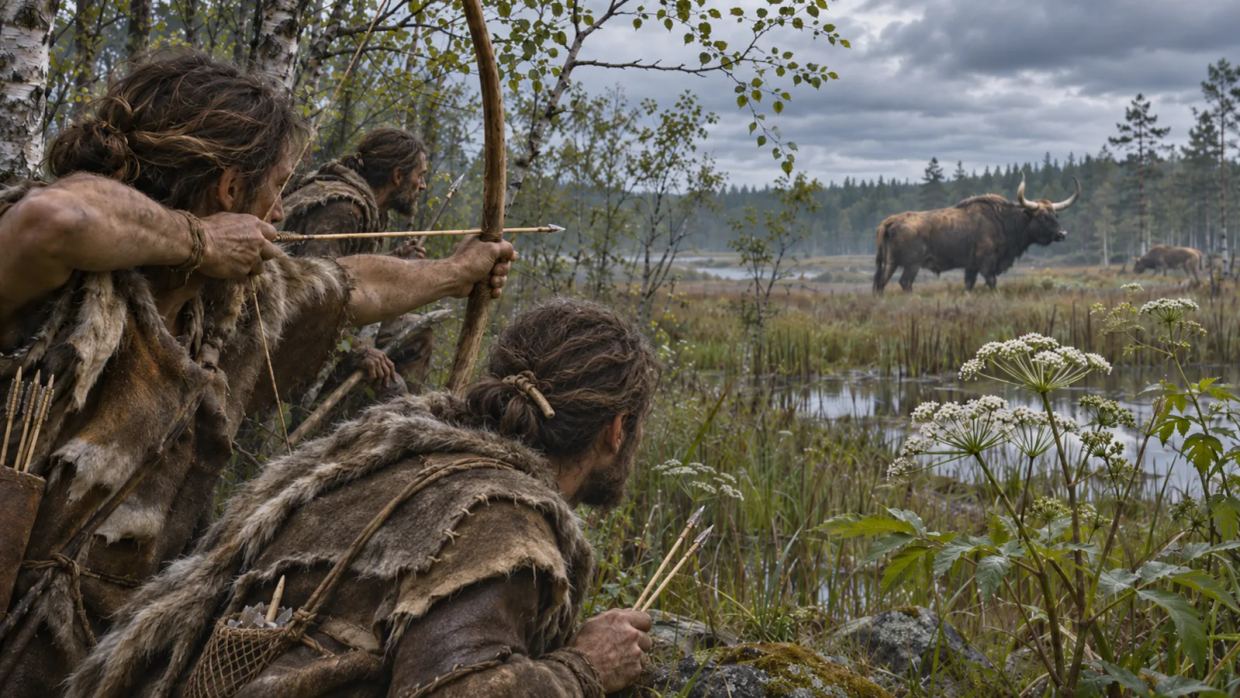
Researchers at Aarhus University led by Prof. Felix Riede analysed archaeological finds from 18 Danish sites dated to roughly 9,000 to 3,950 BC, scinexx reports. They tested whether changes in the form of Mesolithic hunting arrow tips could be linked to poisoned arrows. The data fit this explanation for the early Mesolithic, when aurochs and elk were hunted, but direct traces of poison have not been found scinexx.de
scinexxscinexx.deOpen source ↗.
The finds include 38 animal bones with injuries attributed to human hunting weapons. For nine sites, suitable depictions of 81 small stone tips, known as microliths, were available. The team determined their width and, where possible, the cross-section of the tip, and compared the values with ethnographically documented poisoned and unpoisoned arrows scinexx.de
scinexxscinexx.deOpen source ↗.
Small tips, large prey
In the early Mesolithic, from about 9,000 to 6,400 BC, the examined tips averaged only 8 millimetres in width. Later specimens averaged 14 and 17 millimetres. In the comparison material, documented poison arrowheads averaged 9 millimetres and unpoisoned ones 16 millimetres scinexx.de
scinexxscinexx.deOpen source ↗.
The calculated cross-section of the oldest finds is also closer to that of poison arrows. Early hunting injuries often come from large mammals such as elk and aurochs. Using present-day reference data, the team estimated the average weight of early prey at 348 kilograms, against 159 kilograms for the late Mesolithic sample scinexx.de
scinexxscinexx.deOpen source ↗.
Toxic plants and limits of the evidence
Botanical remains and pollen show that suitable toxins were available in southern Scandinavia. The researchers identified 25 plant groups with compounds that can affect the nervous system or the heart and circulation, including water hemlock, bird cherry, buttercup family plants and bittersweet nightshade. The study highlights water hemlock as a plausible candidate, since it was present in the early post-glacial period. Yew was probably rare or not yet established in the region at that time scinexx.de
scinexxscinexx.deOpen source ↗.
The plant finds only show that active substances could have been available, not that people processed them into hunting poison. The results are consistent with hunting in which several light, possibly poisoned arrows gradually weakened a large animal, but they do not prove it. The shape of a stone tip does not show how it was mounted or whether it carried poison, and some microliths may have served as side edges scinexx.de
scinexxscinexx.deOpen source ↗.
The sample is small and unevenly spread across the three Mesolithic phases. For the middle phase, data on tip cross-section are insufficient, and the animal weights are estimates. Poison traces about 60,000 years old on stone tips are known from South Africa, but no such chemical evidence exists for the European Mesolithic. Targeted chemical analyses of preserved stone tips would be needed to establish whether poisoned arrows were used in Denmark scinexx.de
scinexxscinexx.deOpen source ↗.