Xujiayao fossils in China identified as Denisovan by bone proteins from two of 20 specimens
Protein analysis of two bones from the Xujiayao site in northern China found a Denisovan-specific marker, allowing researchers to describe Denisovan skull anatomy from two sets of fossils.
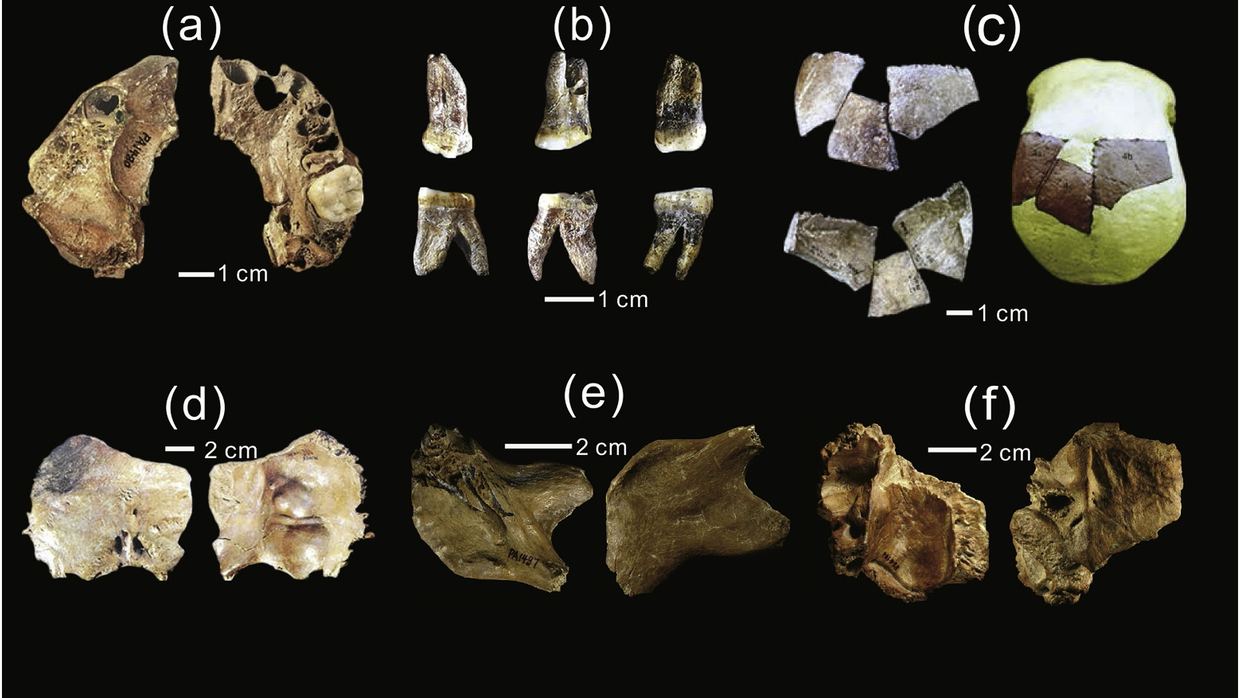
A team led by Qiaomei Fu at the Institute of Vertebrate Paleontology and Paleoanthropology in Beijing identified two fossils from Xujiayao, a site in the Nihewan Basin of northern China, as Denisovan, according to martincid.com's account of a Nature paper published on 21 October 2026 martincid.com
martincid.commartincid.comOpen source ↗. The site yielded 20 human fossils. They were excavated between 1976 and 1979 and dated to about 199,000–138,000 years ago
martincid.com
martincid.commartincid.comOpen source ↗.
Proteins instead of DNA
No DNA survived at Xujiayao, so the team analysed proteins, which last longer. They CT-scanned a piece of right parietal bone and part of a lower jaw, then drilled a small hole in each in a clean room to collect bone powder martincid.com
martincid.commartincid.comOpen source ↗. Two laboratories, at Capital Medical University and Fudan University, identified the protein fragments by mass spectrometry, and the results were checked with two software packages. The authors used the chemical wear typical of ancient proteins to separate them from modern contamination. After filtering, 18 ancient proteins remained
martincid.com
martincid.commartincid.comOpen source ↗.
The decisive marker is one position in the collagen protein COL1A2. Every Denisovan sampled so far carries lysine there, while Neanderthals and modern humans carry arginine. The parietal bone gave 57 fragments with lysine and one with arginine; the jawbone gave 61 against one. A tree built from eight proteins grouped both bones with Denisovans, with statistical confidence above 99 percent martincid.com
martincid.commartincid.comOpen source ↗.
Anatomy and reclassification
The team compared Xujiayao with the Harbin cranium, which earlier protein and DNA work had linked to Denisovans. The shared features include a long, low skull with thick bone (7.7 mm at the top of the head, 12 mm at the parietal bulge), a heavy brow ridge, a sloping forehead, squarish eye sockets, a broad nose opening, flat cheeks and a slightly projecting jaw martincid.com
martincid.commartincid.comOpen source ↗. Unlike Neanderthals, these skulls lack a rounded shape seen from behind and an occipital bun
martincid.com
martincid.commartincid.comOpen source ↗.
The authors argue that brain volume cannot define the species Homo juluensis, whose type specimen is Xujiayao 6 (about 1,700 ml). They report a range of about 1,120 to 1,800 ml in their group, within the 1,090–1,880 ml seen in living humans. On anatomy alone, they also assign Dali, Jinniushan and Hualongdong to the Denisovan lineage martincid.com
martincid.commartincid.comOpen source ↗.
The limits are stated plainly. The protein evidence covers two bones out of 20 and rests on a single amino-acid difference, and the reference set contains five individuals. The other fossils have no protein data in this study. The facial bones in the description come from Harbin and other skulls, and skin, hair and soft tissue cannot be read from bone martincid.com
martincid.commartincid.comOpen source ↗.