NC State: extreme heat days in Costa Rican and Puerto Rican forests rose from ~8 to ~35 per year
Long-term records from the La Selva and El Verde field stations show more extreme heat days by 2024, while rainfall trends differ between the two sites, the authors report.
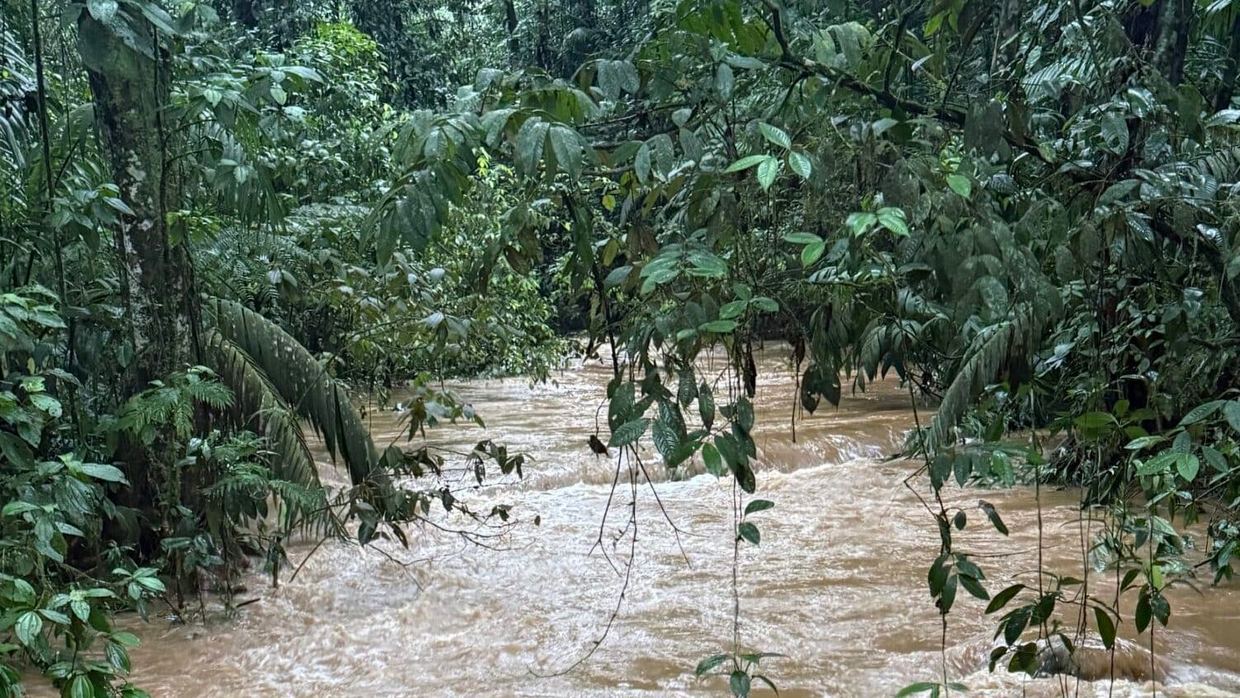
Researchers at North Carolina State University, led by Alonso Ramirez, analysed long-term climate records from the La Selva research station in Costa Rica and the El Verde field station in Puerto Rico, according to news.ncsu.edu. The study was published on Oct. 12 in PLOS Climate. Average temperatures at the sites changed little over time, but both had significantly more days of extreme heat in 2024 than in the data going back to 1992 ncsu.edu
news.ncsu.edunews.ncsu.eduOpen source ↗.
The authors report a decadal warming trend of 0.29°C at both locations. Mean daily temperature was 25.1°C at La Selva (1992–2024) and 23.6°C at El Verde (2000–2024).
Extreme heat days
A hot day was defined as one exceeding the 95th percentile of temperatures at that site. Before 2024, La Selva averaged eight such days per year, and the figure is now 30, Ramirez said ncsu.edu
news.ncsu.edunews.ncsu.eduOpen source ↗. In the paper, a fitted generalized linear model gives about 8 extreme temperature events per year at the start of the records and about 35 in 2024 at both sites
ncsu.edu
news.ncsu.edunews.ncsu.eduOpen source ↗.
The El Niño Southern Oscillation influenced air temperature at El Verde, where the La Niña phase was associated with higher daily temperatures. No such effect was detectable at La Selva. Stream water temperature also rose moderately: by 0.2°C at La Selva and by 0.9°C at El Verde.
Diverging rainfall
The two sites, despite being relatively close, showed different precipitation changes. At La Selva, rainfall exceeding the 99th percentile rose from about one event per year in 1983–1985 to six per year in 2024, and zero-rain days became fewer ncsu.edu
news.ncsu.edunews.ncsu.eduOpen source ↗. El Verde showed no significant increase in heavy-precipitation events, but dry days (under 1.4 mm) increased from 152 to 170 per year
ncsu.edu
news.ncsu.edunews.ncsu.eduOpen source ↗.
Mean annual precipitation is 4166 mm at La Selva (1983–2024) and 3635.8 mm at El Verde (1975–2024). High water levels in streams showed an increasing tendency at both sites, but with marginal statistical support (p = 0.08); the estimated time above the extreme thresholds roughly doubled over the study period.
"That was surprising, that one is getting wetter and one is getting drier," said co-author Marcelo Ardon. He noted that the researchers had expected similar trends at the two sites ncsu.edu
news.ncsu.edunews.ncsu.eduOpen source ↗.
The authors conclude that both wet and dry extremes are becoming more frequent at these two protected Caribbean locations, with consequences for ecosystem conservation and management. Co-authors include Pavel Garcia, Nicholas S. Marzolf and David Genereux.