Bigelow Laboratory: two Southern Ocean water masses regenerate nitrate and silicate at different rates
Measurements from a research cruise show that Subantarctic Mode Water and Antarctic Intermediate Water enrich in nutrients differently as they move north for decades.
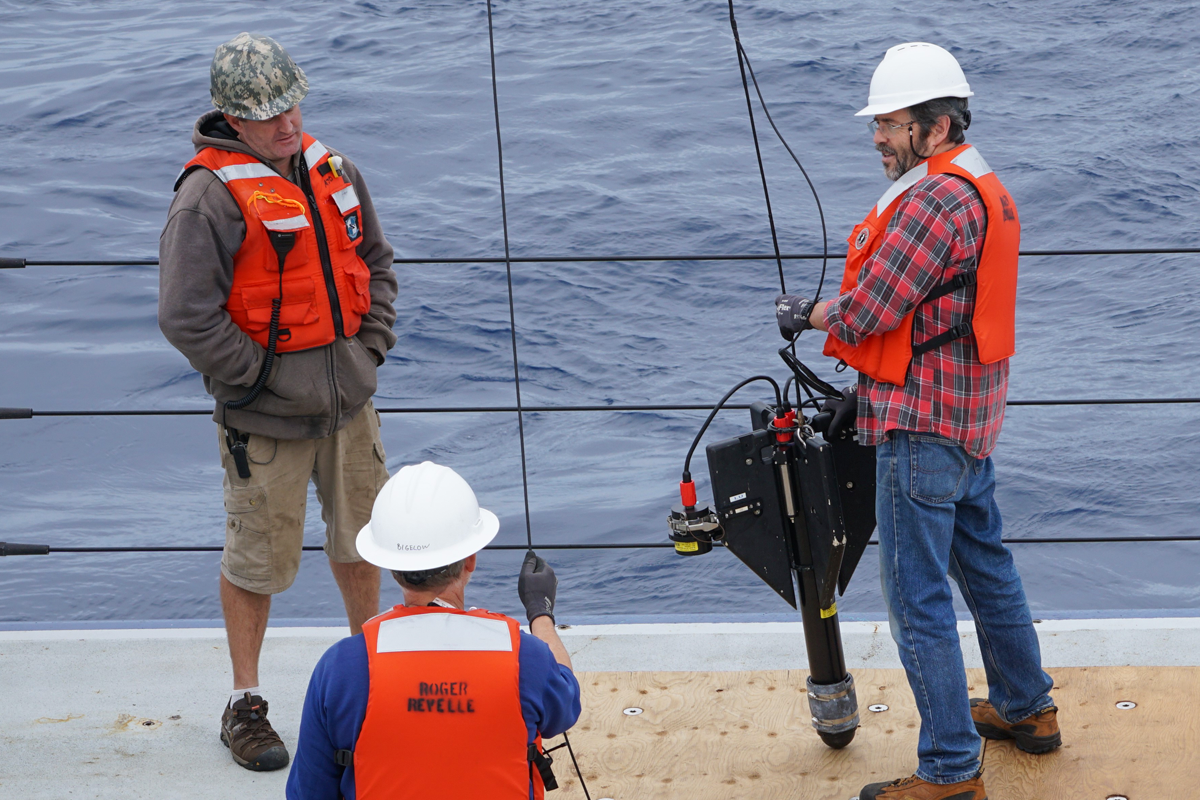
Scientists at Bigelow Laboratory for Ocean Sciences (USA) have compared how two Southern Ocean water masses, Subantarctic Mode Water (SAMW) and Antarctic Intermediate Water (AAIW), regenerate nutrients on their multidecade journey toward the equator, according to bigelow.org. bigelow.org
bigelow.orgbigelow.orgOpen source ↗ The study appeared in the Journal of Geophysical Research: Oceans. The team sailed aboard the R/V Roger Revelle from Hawaii to waters as far as 60°S.
bigelow.org
bigelow.orgbigelow.orgOpen source ↗
Nutrient regeneration along the route
Deep water in the Southern Ocean rises toward the surface, where winter mixing helps form distinct water masses. Part of this water is then subducted and moves north beneath the surface. bigelow.org
bigelow.orgbigelow.orgOpen source ↗ On the way, organic matter breaks down by remineralization and returns nitrate, phosphate and silicate to the water.
bigelow.org
bigelow.orgbigelow.orgOpen source ↗
To estimate how fast the water changes, the researchers used chlorofluorocarbons (CFCs). These compounds entered the atmosphere through refrigeration and air conditioning, and their concentrations and ratios changed over time. Water pulled beneath the surface carries the CFC signature of its formation period, which gives its age. bigelow.org
bigelow.orgbigelow.orgOpen source ↗ Lead author Barney Balch said that combining chemical and biological measurements with this age scale makes it possible to speak about rates.
bigelow.org
bigelow.orgbigelow.orgOpen source ↗
SAMW showed faster nitrate and phosphate remineralization than AAIW. Silicate remineralization was faster in AAIW. bigelow.org
bigelow.orgbigelow.orgOpen source ↗ According to the scinexx summary of the study, the nitrate and phosphate rates in SAMW were roughly seven and six times higher, and the silicate rate in AAIW almost twice as high. The cruise sampled 103 stations along 150°W between 30°S and 60°S from December 2020 to February 2021. Dissolved oxygen fell with water age while dissolved inorganic carbon rose.
Possible effect on phytoplankton
Nitrate is often the limiting nutrient for phytoplankton, and diatoms need silicate for their cell walls. bigelow.org
bigelow.orgbigelow.orgOpen source ↗ The authors note that faster nitrogen and phosphorus regeneration in SAMW could support phytoplankton that do not need silica, such as coccolithophores and dinoflagellates. Greater silicate regeneration in AAIW could favor diatoms.
bigelow.org
bigelow.orgbigelow.orgOpen source ↗
The study also found changes in temperature and salinity linked to water age. These may reflect conditions in the Southern Ocean when the waters formed, and may preserve a record of how ocean properties shifted over several decades. bigelow.org
bigelow.orgbigelow.orgOpen source ↗ Balch said that nutrient regeneration in the two water masses supports about three-quarters of primary production on Earth north of 30°S.
bigelow.org
bigelow.orgbigelow.orgOpen source ↗
The work involved Bigelow Laboratory researchers together with colleagues from Woods Hole Oceanographic Institution, Arizona State University, the Bermuda Institute of Ocean Sciences, Texas A&M University and the University of Miami. It was supported by the U.S. National Science Foundation. bigelow.org
bigelow.orgbigelow.orgOpen source ↗