Micro-CT scan reveals the code of the Ann Francis shipwreck's 16th-century brass lock: A-N-C-E
Researchers at Cardiff University and the National Museum of Wales determined the four-letter combination without touching the lock, using micro-CT imaging.
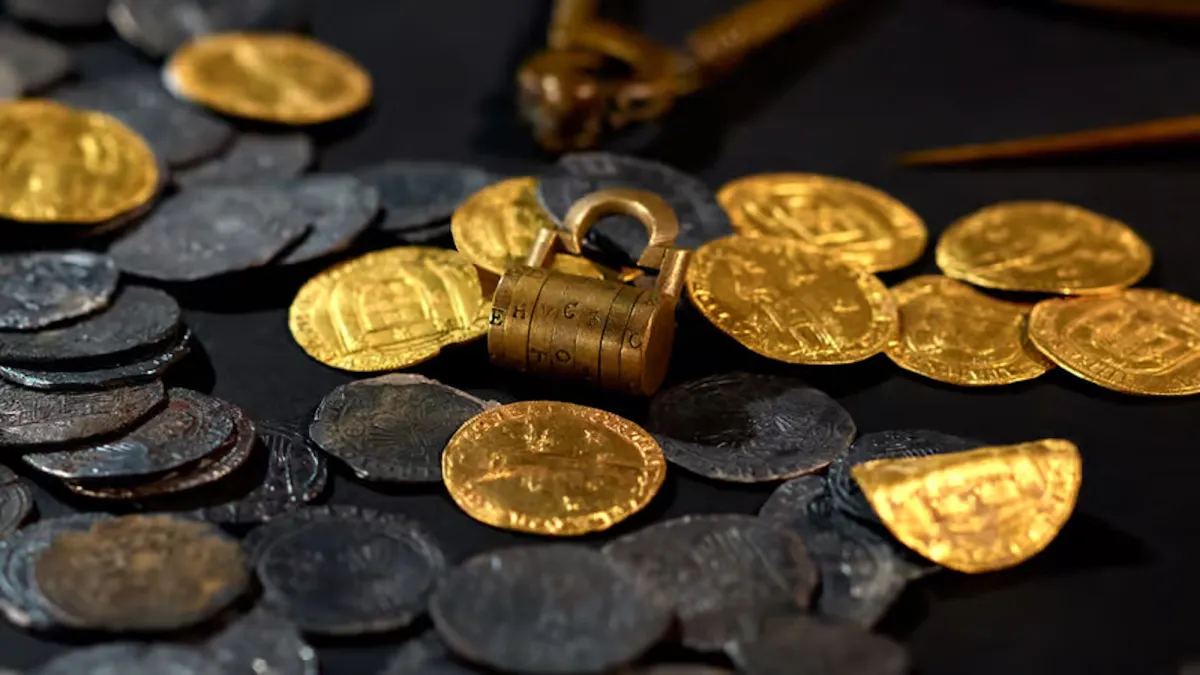
Archaeologists have determined the combination of the brass lock recovered from the Ann Francis shipwreck, Popular Science reports. Researchers at Cardiff University and Amgueddfa Cymru, the National Museum of Wales, used micro-computed tomography (micro-CT) to look inside the 16th-century mechanism without touching it. The four-letter code is A-N-C-E. popsci.com
Popular Sciencepopsci.comOpen source ↗
The ship and the lock
The merchant ship Ann Francis was lost on 28 December 1583 in a storm during a return voyage from Spain, and wrecked on the coast of southern Wales. The exact crew size is unclear; around 14 sailors reportedly drowned. popsci.com
Popular Sciencepopsci.comOpen source ↗
The wreck stayed missing for 415 years, until metal detectorist Peter Hughes found it while surveying Margam Beach in 1998. Hughes and archaeologists then searched the area for more than 20 years. By 2017, preservationists had documented over 800 gold and silver coins from Germany, Spain and Portugal, along with compasses, ship equipment and cutlery. popsci.com
Popular Sciencepopsci.comOpen source ↗
The brass combination lock is still in working condition after four centuries buried in sand. It may have guarded the coins or other valuables that did not survive, but this is not established. For hundreds of years there were no hints to its combination. popsci.com
Popular Sciencepopsci.comOpen source ↗
Reading the mechanism
Tampering with the delicate lock was ruled out. Using micro-CT, the team built a detailed 3D image of its internal mechanism. "By creating a detailed 3D image of the internal mechanism, I could see how the notches lined up with the letters and identify the exact combination," said David Williams, a biomechanics engineer at Cardiff University. He called the experience "certainly a first" for his team. popsci.com
Popular Sciencepopsci.comOpen source ↗
Alastair Willis, senior numismatics curator at Amgueddfa Cymru, said Elizabethan combination locks are known in Britain, but this one is in exceptionally good condition and is associated with a dated wreck. He added that, now the code is solved, the researchers wonder whether it meant something to the lock's owner. popsci.com
Popular Sciencepopsci.comOpen source ↗