Yale and Cornell economists' geospatial model finds steel plants and estimates output, R² above 0.8
Researchers from Yale and Cornell trained models on Chinese data and applied them to South Korea and Iran; the authors propose the method for near-real-time tracking of industrial activity.
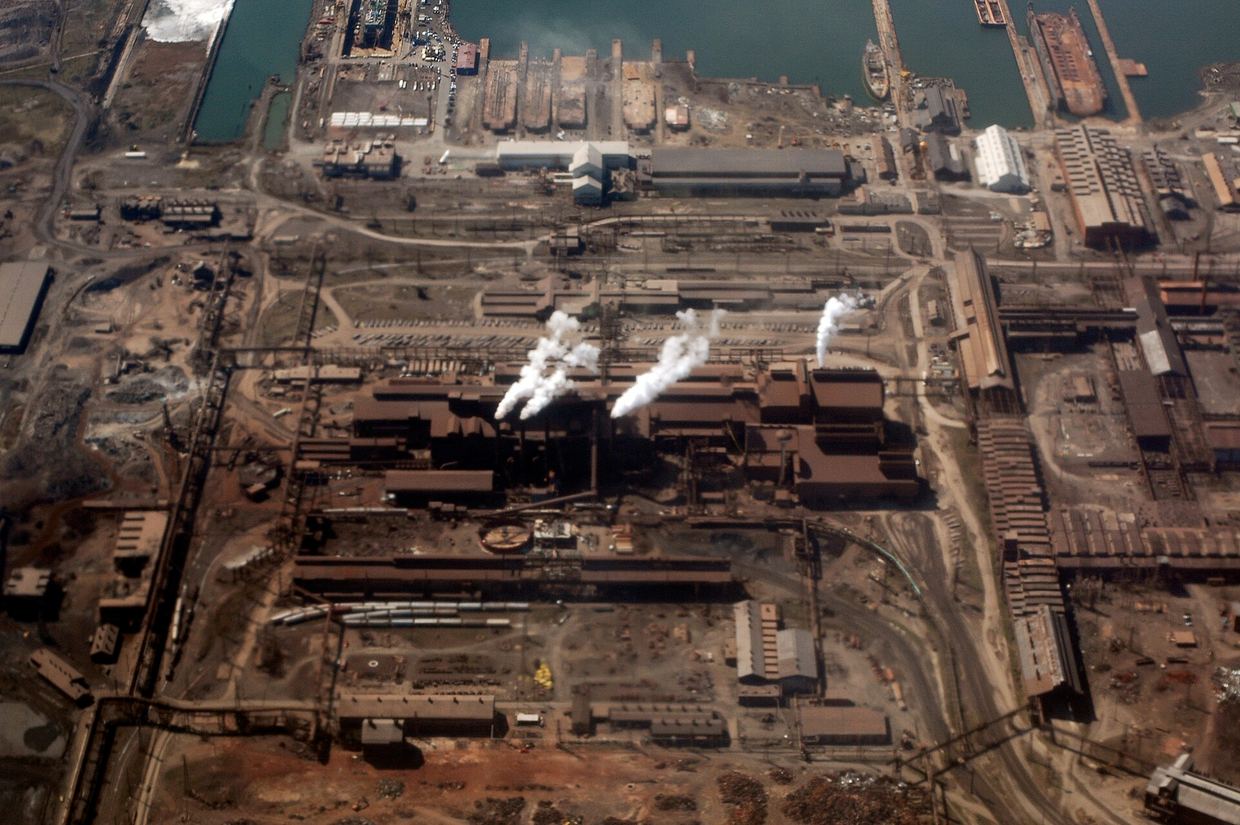
Anton Yang, Jianwei Ai and Costas Arkolakis, from Yale University and Cornell University, published a methodology for detecting and measuring economic activity from geospatial data in Nature Communications on 3 November 2026. doi.org
Nature Communicationsdoi.orgOpen source ↗ The authors applied it to steel production, which they describe as a major source of industrial pollution worldwide.
doi.org
Nature Communicationsdoi.orgOpen source ↗
The work is a modelling study. It reports how well the trained models reproduce plant locations and output in test samples and in two countries outside the training data.
Data and models
The authors combined plant output data with geospatial data: ambient air pollutants, nighttime lights and temperature. doi.org
Nature Communicationsdoi.orgOpen source ↗ On this basis they trained models to predict where steel plants are located and how much they produce.
doi.org
Nature Communicationsdoi.orgOpen source ↗ The training data came from Chinese steel plants.
The models were checked on plants that were absent from the training sample. According to the authors, they identify about 88% of such plants within a 1 km radius and about 94% within a 5 km radius. doi.org
Nature Communicationsdoi.orgOpen source ↗
Validation and transfer to other countries
For output prediction, the authors report R² above 0.8 at a 1 km grid and at the plant level. doi.org
Nature Communicationsdoi.orgOpen source ↗ The same level of R² was obtained in regional validations and in time series validations.
doi.org
Nature Communicationsdoi.orgOpen source ↗
The model trained on Chinese steel data was then applied to South Korea and Iran. The authors report that it reliably detected the location of steel plants in both countries and measured their total annual output. doi.org
Nature Communicationsdoi.orgOpen source ↗
The authors state that the approach can be adapted to other industries and regions. They suggest that policymakers and researchers could use it to track and measure industrial activity in near real time. doi.org
Nature Communicationsdoi.orgOpen source ↗ The paper reports results for steel only; other industries are named as a possible direction of adaptation.
