Cryo-EM structure of an asymmetric TraI dimer shows how F-plasmid conjugation is initiated
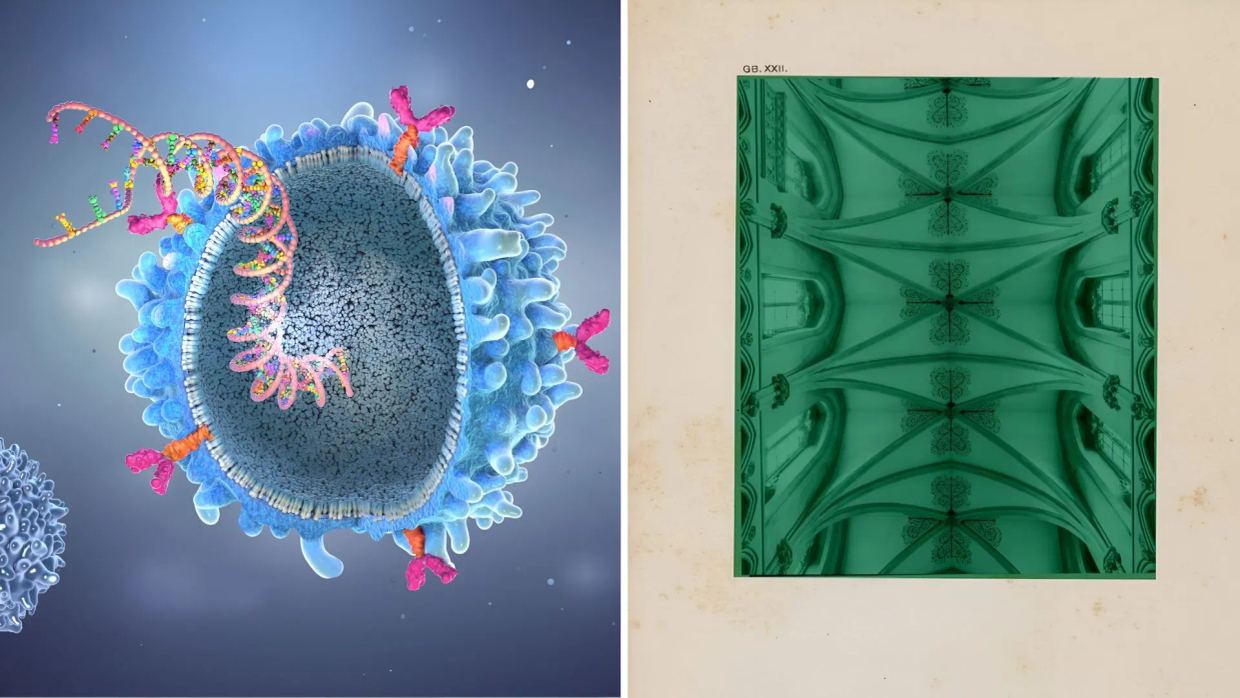
Researchers from Queen Mary University of London and Imperial College London resolved the TraI homodimer: one molecule melts DNA at the transfer origin, the other loads the helicase.
Researchers at Queen Mary University of London and Imperial College London have reported the cryo-EM structure of a functionally asymmetric TraI homodimer, the relaxase-helicase of the F-plasmid conjugation system. The paper by Danylo Gorenkin, Ruina Liang, Jonasz B. Patkowski, Salomé Bodet-Lefèvre, Tiago R. D. Costa and Aravindan Ilangovan appeared in Nature Communications on 3 November 2026 doi.org
Nature Communicationsdoi.orgOpen source ↗.
TraI and the start of conjugation
Bacterial conjugation drives horizontal gene transfer and accelerates the spread of antibiotic resistance. In F-plasmid systems, TraI is a bifunctional enzyme. It initiates transfer by nicking plasmid DNA through its trans-esterase activity, and then unwinds the plasmid with its helicase domains doi.org
Nature Communicationsdoi.orgOpen source ↗.
Previous evidence suggested that two TraI molecules act cooperatively. How their activities are coordinated in space and time had remained unclear doi.org
Nature Communicationsdoi.orgOpen source ↗.
Asymmetric dimer and control by IHF
In the reported structure, the two TraI molecules play different roles. According to the authors, dimerisation is mediated predominantly by single-stranded DNA doi.org
Nature Communicationsdoi.orgOpen source ↗.
One TraI molecule melts the DNA duplex at the origin of transfer by means of its trans-esterase activity. This melting enables a second TraI molecule to load its helicase onto the transfer strand of the intact plasmid doi.org
Nature Communicationsdoi.orgOpen source ↗.
The trans-esterase domain is intrinsically active. The host factor IHF, however, inhibits nicking until helicase loading occurs, the authors report doi.org
Nature Communicationsdoi.orgOpen source ↗.
The authors describe this as a regulatory loop that couples strand nicking with helicase engagement. They present it as a unified mechanism for initiating conjugative DNA processing doi.org
Nature Communicationsdoi.orgOpen source ↗.
The data thus place two activities of a single protein, nicking and unwinding, in an ordered sequence. In that sequence the nicking step is held back by IHF until the partner molecule has loaded the helicase doi.org
Nature Communicationsdoi.orgOpen source ↗.