Review: large electrolysis plants in arid regions may withdraw 35–170 L of water per kg of hydrogen
A modeling-based review of hydrogen export projects in North Africa, Chile and Australia finds water withdrawal far above the stoichiometric nine litres per kilogram.
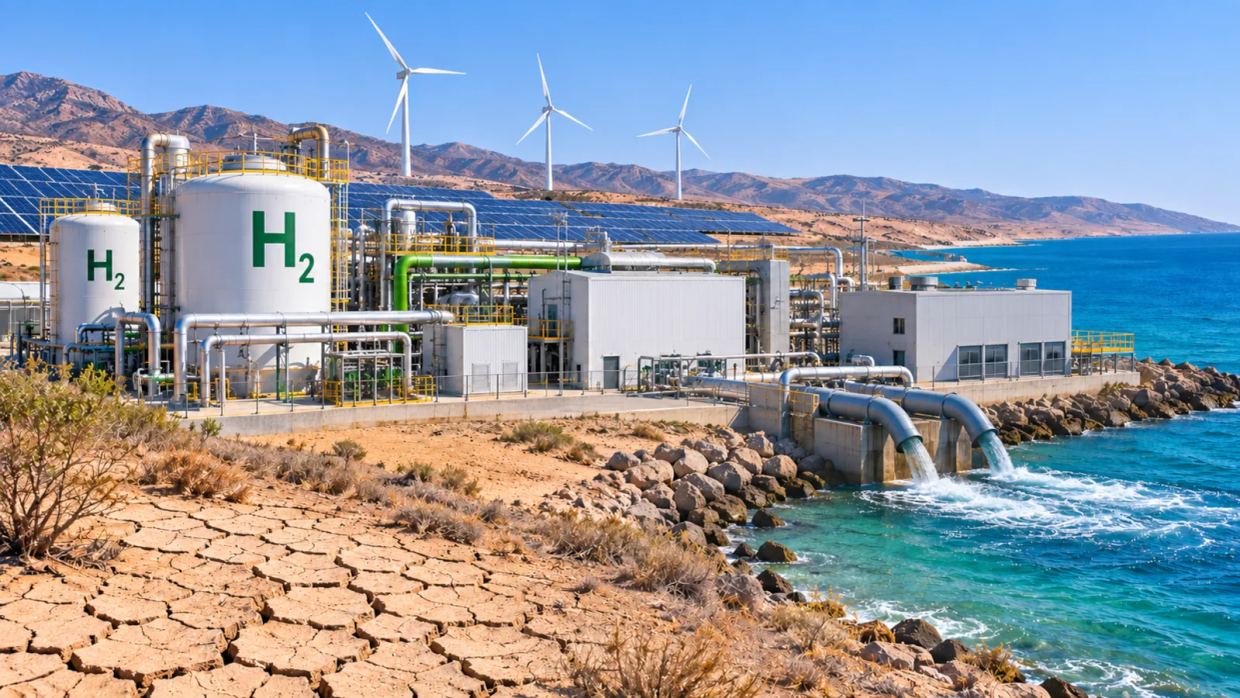
Researchers at Eastern Mediterranean University (Famagusta, Cyprus), led by Dr. Akeem Adeyemi Oladipo, published a review in Critical Insights in Environmental Science and Technology on the water demand of large green hydrogen projects. It covers arid export corridors in Australia, Chile and North Africa doi.org
Critical Insights in Environmental Science and Technologydoi.orgOpen source ↗. The authors drew on published studies and technical data and modeled an electrolysis plant with a capacity of one gigawatt in a hot, dry climate.
Stoichiometry requires just under nine litres of pure water per kilogram of hydrogen. Once raw-water purification, cooling and other operating losses are included, plants would withdraw about 35 to 170 litres per kilogram, depending on technology and conditions doi.org
Critical Insights in Environmental Science and Technologydoi.orgOpen source ↗. A modeled coastal plant at 75 percent load factor would take roughly nine to eleven million cubic metres of seawater per year. These figures are not measurements from an existing plant in North Africa: the work is a review with modeled examples.
Brine, groundwater and coastal impact
Many projects plan to desalinate seawater to spare freshwater. This produces concentrated brine that may also contain residues of the chemicals used. If it is discharged into poorly flushed bays, it could harm organisms on the seabed and affect local fish stocks doi.org
Critical Insights in Environmental Science and Technologydoi.orgOpen source ↗.
Inland, the risks are different if plants draw on deep, barely renewable groundwater. A falling water table could threaten springs, wetlands, and the supply of nearby settlements and farmland. The scale of the effect depends on the water source, the plant design and local ecological conditions.
Metrics and water sources
The European Union aims to import 10 million tonnes of renewable hydrogen per year by 2030, and North African states plan to build production capacity for it. Many of the planned sites already face water scarcity. Key regulations currently tie the renewable status of hydrogen mainly to the origin of the electricity and to greenhouse gas emissions. The authors propose supplementary indicators that compare water withdrawal with locally available resources and record the load from saline wastewater doi.org
Critical Insights in Environmental Science and Technologydoi.orgOpen source ↗.
The authors name treated municipal wastewater as a possible relief. It would need further purification for electrolysis, and in many places it is already used for irrigation or groundwater recharge. Direct seawater electrolysis remains a little-developed option for gigawatt-scale plants. The authors also point to zoning based on planetary boundaries. The described risks are not damage already demonstrated at planned export plants; the analysis indicates what should be assessed before large projects are approved.