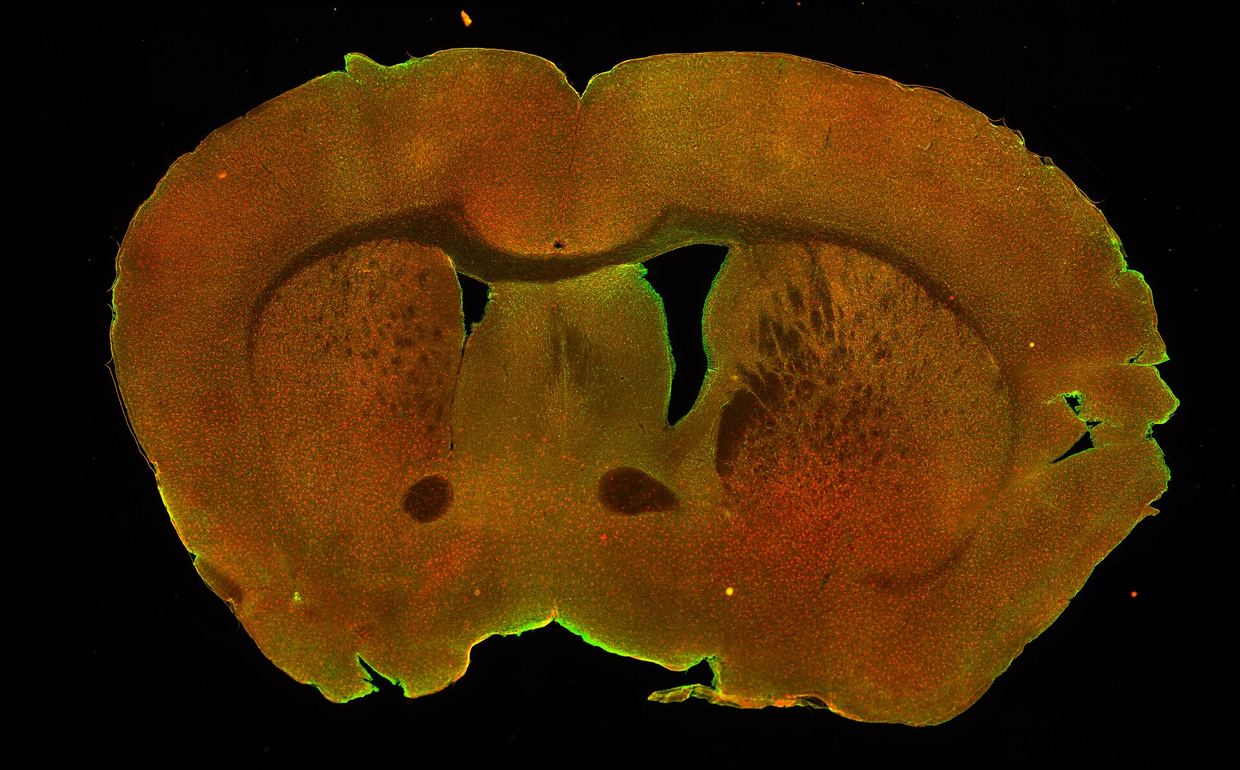
Peking University: old mice lose Bglap3+ neurons in medial entorhinal cortex, with weaker spatial coding
Peking University researchers found that old mice have fewer grid cells and less stable spatial coding, and fewer Bglap3+ layer III neurons in the medial entorhinal cortex.

Researchers at Peking University in Beijing report in Nature Communications on cellular and molecular changes in the medial entorhinal cortex (MEC) of aging mice. Old mice had a reduced proportion of grid cells and decreased spatial stability. The authors identified the gene Bglap3 as a marker of a subpopulation of layer III neurons whose cell number declines with age doi.org
Nature Communicationsdoi.orgOpen source ↗.
The work was carried out at the State Key Laboratory of Membrane Biology and the PKU-IDG/McGovern Institute for Brain Research. The corresponding authors are Guge Suri and Chenglin Miao.
Background: MEC and age-related cognitive decline
Aging-related cognitive decline includes impairments in spatial orientation and memory. Earlier studies linked it to dysfunction within the hippocampus and the MEC. According to the authors, the cellular and molecular alterations underlying MEC aging remain poorly understood, and this study addresses that gap doi.org
Nature Communicationsdoi.orgOpen source ↗.
In the experiments, old mice showed a lower share of grid cells than young animals. Their spatial stability was also decreased doi.org
Nature Communicationsdoi.orgOpen source ↗. Grid cells are MEC neurons involved in spatial representation, so both changes concern the same spatial coding system.
Transcriptomic profiling and Bglap3+ neurons
To look for molecular differences, the team profiled the MEC transcriptome with 10x Genomics Visium technology. The comparison between young and old mice revealed 1664 differentially expressed genes doi.org
Nature Communicationsdoi.orgOpen source ↗.
Among them, Bglap3 was identified as a marker gene for a subpopulation of layer III neurons. The number of these cells was reduced in old mice doi.org
Nature Communicationsdoi.orgOpen source ↗.
The authors then tested the function of these cells. Chemogenetic silencing of Bglap3+ neurons in young mice impaired the spatial tuning of MEC neurons doi.org
Nature Communicationsdoi.orgOpen source ↗.
Based on these findings, the authors say the results elucidate cellular and molecular mechanisms that contribute to age-related MEC dysfunction. They suggest that the loss of Bglap3+ neurons may underlie spatial coding deficits in aging doi.org
Nature Communicationsdoi.orgOpen source ↗. All the data come from experiments on mice, and the article does not report human results or any treatment.